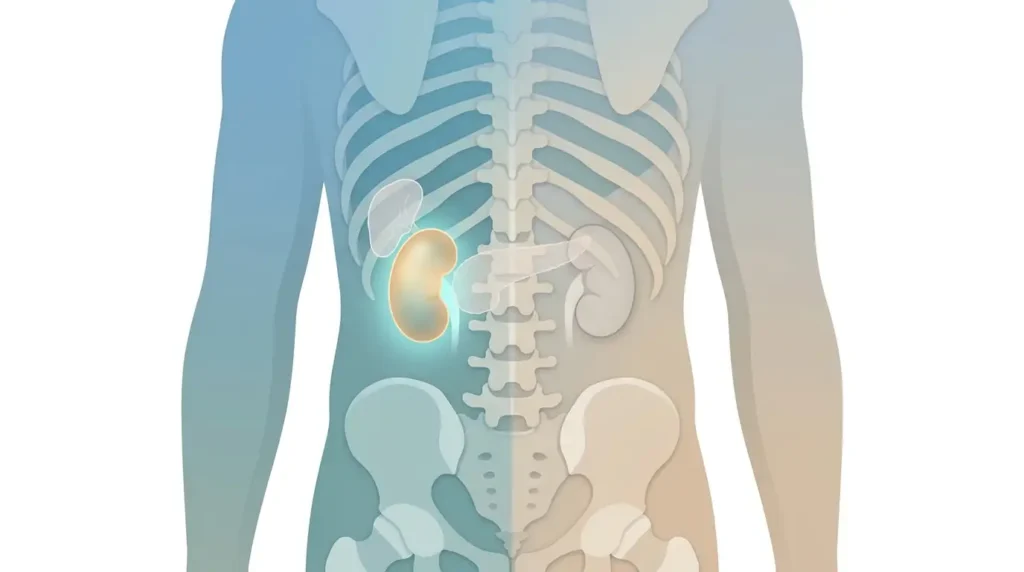
Right kidney pain is most often caused by a kidney stone, a kidney infection, or a blockage that stops urine from draining. But the right side of your body is crowded, and pain that seems to come from the kidney can really come from the liver, gallbladder, appendix, or colon.
This guide focuses on what causes pain on the right, how to tell a kidney cause from a look-alike, and which signs need the emergency room. For a map of where kidney pain is felt, see our guide to where kidney pain is located, and for how the two sides compare, see left kidney vs right kidney.

Key Takeaways
- The most common kidney causes of right-sided pain are stones, infection, and blocked urine flow.
- The liver, gallbladder, appendix, and colon sit next to the right kidney and can cause similar pain.
- Pain after fatty meals points toward the gallbladder. Pain that moves to the lower right belly with fever can mean appendicitis.
- Chronic kidney disease itself rarely causes pain, so pain with it needs another explanation.
- Fever with chills, severe pain, or pain after an injury needs emergency care.
What Usually Causes Right Kidney Pain?
Most pain that truly comes from the right kidney has one of a few causes. Each leaves its own clues, which is why your doctor will ask about fever, urination, and the pattern of the pain.
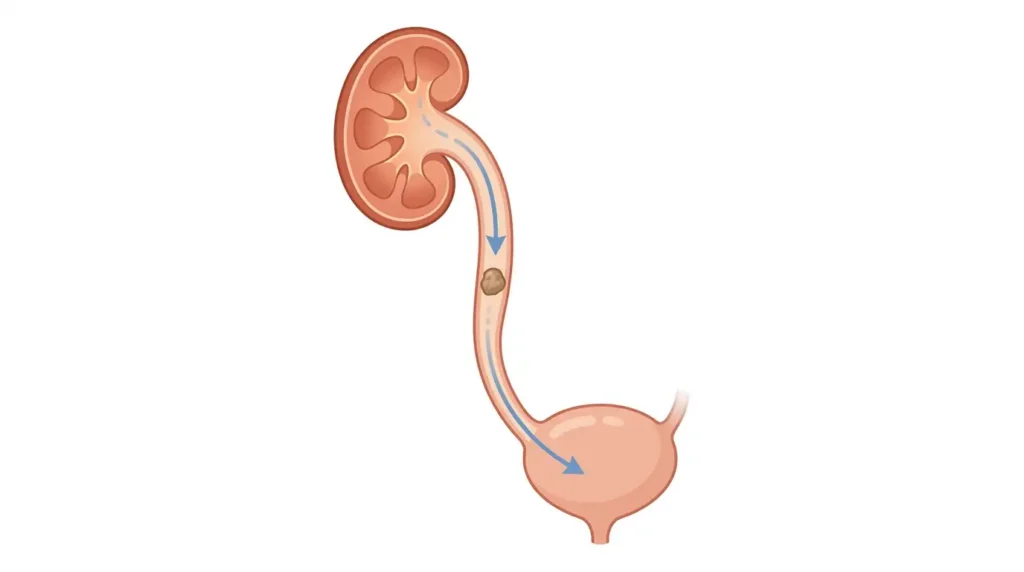
- A kidney stone. A stone that moves into the ureter blocks urine and causes sudden, intense pain that comes in waves. See how the pain moves in our guide to kidney stone pain location.
- A kidney infection. Bacteria that travel up from the bladder cause fever, chills, and a steady ache in the flank. Our guide to kidney infection symptoms lists the warning signs.
- Blocked urine flow. A stone, a narrowed ureter, or another blockage can make the kidney swell, which is painful even without infection.
- Injury. A fall or blow to the right side can bruise the kidney and cause blood in the urine.
- Cysts or inherited kidney disease. Large cysts can cause a dull, persistent ache. Learn more in our page on kidney cysts.
The Merck Manual notes that pain from a kidney disorder is usually felt in the side or the small of the back, and that a stone entering the ureter causes severe, crampy pain. If you cannot tell whether you have a stone or an infection, our comparison of kidney stones vs kidney infection can help.
Which Organs on the Right Side Can Feel Like Kidney Pain?
The right flank sits beside the liver, gallbladder, appendix, and colon. This table shows the clues that most often separate each one from a kidney problem. It is a guide only, and it does not replace an exam.
| Possible source | Clues that point to it | Clues that point to the kidney instead |
|---|---|---|
| Gallbladder | Pain under the right ribs after a fatty meal, sometimes spreading to the right shoulder blade, with nausea | Pain unrelated to meals, with fever or urinary symptoms |
| Liver | Dull ache under the right ribs, sometimes with yellow skin or eyes | Pain lower and deeper in the flank, with changes in urine |
| Appendix | Pain that starts near the belly button and moves to the lower right belly, with loss of appetite and fever | Pain higher in the flank, with burning urination or blood in the urine |
| Colon | Cramping, bloating, gas, or changes in bowel habits | Pain that stays the same with bowel movements |
| Right ovary (in women) | Sudden pain low on the right side, sometimes with a missed period or vaginal bleeding | Pain higher in the flank with fever or urinary symptoms |
| Back muscle or spine | Pain that changes when you bend, twist, or press on the spot | Deep pain that does not change with movement |
The back is the most common mix-up. Our guides on {L(‘/how-to-tell-if-your-back-pain-is-coming-from-your-kidneys/’, ‘whether back pain is coming from your kidneys’)} and {L(‘/kidney-pain-vs-back-pain-how-to-tell-the-difference/’, ‘kidney pain vs back pain’)} walk through it.

Is It Right Kidney Pain or Appendicitis?
Appendicitis is the right-sided look-alike that cannot wait. It often begins as a vague ache around the belly button, then settles in the lower right belly over several hours. The pain tends to get worse when you move, cough, or press on the area, and it often comes with a low fever, nausea, and loss of appetite.
A kidney infection or stone more often starts higher, in the flank or back, and may come with burning urination or blood in the urine. Because the two can look alike, do not wait to see which it is. Pain in the lower right belly with fever needs same-day care, and severe or worsening pain needs the emergency room.
Is a Gallbladder Problem Behind Your Right-Sided Pain?
Gallstones can cause pain that sits under the right ribs and reaches around to the back or the right shoulder blade. The classic clue is timing: the pain often follows a heavy or fatty meal and may last from 30 minutes to a few hours. Nausea is common.
Kidney pain from a stone also comes in waves, but it usually sits lower in the flank and may spread toward the groin. If your pain flares after meals, mention that to your doctor, because it points to digestion more than the kidney.
Can Chronic Kidney Disease Cause Right-Sided Pain?
Usually not. Chronic kidney disease tends to be quiet, and many people have no pain at all until the later stages. If you have kidney disease and new pain on the right, it is more likely to come from a stone, an infection, a cyst, or a problem outside the kidney. Do not assume it is the kidney disease.
Our guide to kidney disease and back pain explains what is normal and what is not, and our page on signs your kidneys are not working properly covers the symptoms that are more typical.
How Do Doctors Find the Cause of Right Kidney Pain?
Your doctor will ask when the pain started, whether it comes in waves, and whether you have fever, nausea, or changes in urination. They will examine your back and belly and usually test a urine sample for blood and infection.
Blood tests show how well your kidneys are working, and imaging such as an ultrasound or CT scan can show a stone, swelling, a blockage, or a problem in a nearby organ. Our guide to kidney function test results explains the numbers on a blood test, and our page on blood in the urine explains what that finding can mean.
Which Doctor Should You See for Right-Sided Pain?
Start with your primary care clinician or urgent care, who can order the first tests. A urologist usually treats stones that need to be removed, and a nephrologist helps when kidney function is affected or stones and infections keep returning. Our guide to nephrologist vs urologist explains the difference.
If you are a man, our guide to kidney pain in men covers causes that are specific to men. For women, see our guide to kidney pain in women.
When Is Right-Sided Pain an Emergency?
Get emergency care or call 911 if you have:
- Severe pain that does not ease, or pain with repeated vomiting
- Fever with shaking chills
- Pain in the lower right belly with fever or loss of appetite
- Pain after a fall, a car accident, or a blow to your side
- Sudden pain low on the right side if you could be pregnant
- Being unable to urinate, fainting, or confusion
See a doctor within a day or two if the pain lasts, keeps coming back, or comes with burning urination, cloudy urine, or swelling in your legs or around your eyes.
What Should You Do While You Wait to Be Seen?
If your pain is mild and you have no emergency signs, write down when it started, how long each episode lasts, and whether it relates to meals, movement, or urination. Rest and try gentle heat for comfort.
Ask a pharmacist or your doctor before taking ibuprofen or naproxen, since they can strain the kidneys. Our guide to pain relievers and your kidneys explains why. Seek care the same day if the pain worsens or a fever appears.
If your pain is on the left instead, read our guide to left kidney pain, where the nearby organs are different.
Talk to ANC About Right Side Kidney Pain
If you have ongoing pain on your right side, or you have had kidney stones or infections before, our nephrologists can help you find the cause. Call 651-772-6251 or contact our team online.
Frequently Asked Questions
What causes right kidney pain?
The most common causes are kidney stones, a kidney infection, and a blockage that stops urine from draining. Injury and large cysts can also cause it.
Is pain on the right side always the kidney?
No. The gallbladder, liver, appendix, colon, back muscles, and in women the ovary all sit near the right kidney and can cause similar pain, so a doctor needs to find the source.
How can I tell right kidney pain from appendicitis?
Appendicitis often starts near the belly button and settles in the lower right belly with fever and loss of appetite. Kidney pain usually starts higher in the flank and may come with urinary symptoms. Because they overlap, get same-day care for lower right pain with fever.
Can gallbladder pain feel like right kidney pain?
Yes. Gallbladder pain sits under the right ribs and may reach the back or right shoulder blade, often after a fatty meal. Kidney pain is usually lower and may come with urinary changes.
Can right kidney pain go away on its own?
Mild causes such as a muscle strain can settle in a few days. Pain from a stone or infection can get worse, so see a doctor if it lasts or comes with fever or urinary changes.
Sources
Medical Disclaimer
This article is for general educational purposes only and is not a substitute for professional medical advice, diagnosis, or treatment. Always consult a qualified healthcare provider with questions about your specific care and treatment options. If you think you may be having a medical emergency, call 911.