
Tuning Into Your Body’s Internal Signals
Many women wonder if a sudden, deep ache in their side is just a sign of an intense workout or something requiring medical attention. It is common to ask whether a dull throb near your ribs is a simple muscle pull or a distress signal from an internal organ. Experiencing unexpected torso discomfort can quickly cause a lot of worry and stress.
This can feel confusing because women’s bodies naturally manage many overlapping sensations, from monthly cycle cramps to muscle fatigue. However, learning to pinpoint the exact location of kidney discomfort and recognizing its unique companion signs can help you protect your wellness. Gaining clear insights allows you to replace anxiety with a proactive, confident plan for your health.
Your internal filtration system relies on a clean, open pathway to keep your blood supply pure and your fluids perfectly balanced around the clock. Because a woman’s pelvic and urinary anatomy is compact, temporary imbalances can occasionally arise. Spotting these subtle warning markers early gives you an exceptional shield against deeper organ stress.
We want to reassure you that learning to interpret these internal messages is completely straightforward once you know what to look for. You do not have to guess your way through physical discomfort or ignore what your system is trying to say. Staying informed about your body’s unique anatomy is a beautiful form of everyday self-care.
Pinpointing the Precise Female Kidney Pain Location
A very common misconception is that your kidneys sit low in your back, right above your hips. Because of this, many women assume that standard lower lumbar stiffness is an organ issue. In reality, your kidneys are located much higher up in your abdominal cavity, nestled deep against your back muscles.
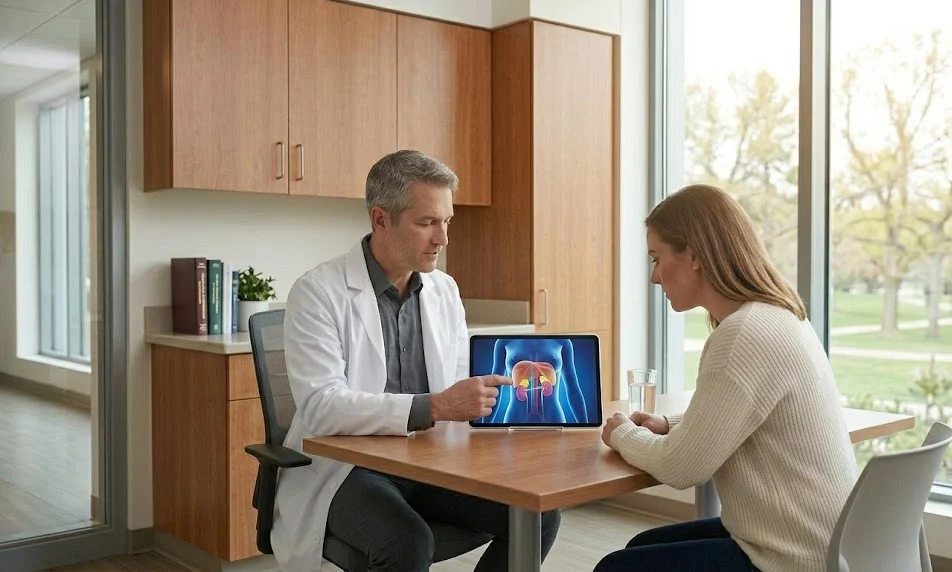
The true female kidney pain location is situated right under your lower rib cage, on either side of your spine. When a kidney experiences swelling or irritation, you will feel a deep, throbbing ache in this upper-middle back or side area, technically known as your flank. This discomfort is typically one-sided, though it can occasionally affect both areas simultaneously.
Unlike a surface muscle injury, this visceral sensation stems from the stretching of the delicate protective capsule surrounding the organ. Because it is deep internal pressure, the ache often feels structural, unyielding, and completely unaffected by simple changes in your sitting or standing posture.
Recognizing the Unique Symptoms and What Your Body Is Saying
Key signs that your back discomfort is coming from your kidneys include:
-
A deep, constant throb high in your back or side that does not change when you move or rest.
-
A sudden, rapidly spiking fever accompanied by intense, uncontrollable shivering chills.
-
Experiencing severe waves of nausea, a sudden loss of appetite, or actual vomiting.
-
Noticing your urine looks heavily cloudy, smells unusually sharp, or shows a distinct pink tint.
-
A sudden, profound drop in your daily energy levels, leaving you feeling completely exhausted.
Neighboring urinary tracking signs that often appear alongside the ache:
-
A sharp, stinging, or burning sensation every single time you attempt to pass urine.
-
Feeling an intense, frantic urge to run to the restroom immediately, even if your bladder is mostly empty.
-
Needing to use the restroom frequently throughout the night but only passing a small amount of fluid.
When these symptoms combine, your body is telling you that a lower urinary tract issue has likely traveled upward. A basic bladder issue will stay localized to lower pelvic pressure and burning, but high fever and flank aches mean the filtration units are involved. Listening closely to these overlapping signals helps you seek the right care safely and promptly.
Primary Causes of Kidney Discomfort in Women
Common health events that can trigger organ distress include:
-
Advanced Urinary Track Infections: Surface bacteria multiplying in the bladder and climbing up the draining tubes.
-
Mineral Crystal Blocks (Stones): Small, hard mineral deposits forming inside the filter and creating a fluid backup.
-
Temporary Fluid Backups: Anatomical or structural pressures that slow down the natural downward flow of urine.
-
Hormonal or Lifestyle Shifts: Changes during pregnancy or menopause that alter the delicate environment of your tract.
Understanding these underlying causes helps you see why keeping your urinary system flowing freely is so essential. Most upper organ complications start out as a simple lower issue that did not get cleared away in time.
When you recognize these patterns, you can take mindful actions to protect your wellness every single day. Guarding your lower tract serves as an exceptional defensive shield for your upper filtration organs over the long term.
Distinguishing Kidney Pain From Muscle Strains and Cramps
Women frequently confuse deep organ discomfort with a standard lower back muscle strain from exercise or housework. A muscle strain will hurt intensely when you twist your torso, bend down, or stand up from a deep chair. Kidney pain remains completely unchanged whether you are moving around or resting perfectly still.
Another frequent mix-up happens between kidney discomfort and typical menstrual or ovarian aches. Menstrual cramps are generally felt much lower down in the front pelvis or across the very bottom of the lumbar spine. Organ discomfort stays concentrated much higher up, right under the rib cage, and does not fade when you apply a standard heating pad.
Gaining accurate insights shields you from making false assumptions about your body’s internal condition. It reminds you to stay vigilant and seek professional evaluation whenever your physical baseline shifts unexpectedly.
When to Consult a Specialist for a Comprehensive Evaluation
If you are experiencing a persistent ache under your ribs alongside changes in your bathroom routine, seek professional advice. Trying to guess the exact cause of a deep torso ache can lead to unnecessary discomfort and delayed relief. Seeking guidance early allows you to explore safe, highly targeted management options with an experienced team.
Our expert providers at Associated Nephrology Consultants in Maplewood, MN are always here to help evaluate your urinary wellness. We can run simple, painless tests to check exactly how your filters are running and ensure your system stays safe.
Please seek immediate medical attention if your symptoms include a rapidly climbing fever, severe shivering, or persistent vomiting. Noticing visible blood in your urine or feeling a sudden shortness of breath also requires an urgent medical evaluation.
For everyday health questions and regular preventative checkups, staying in touch with a specialist keeps your body protected. Residents living across the greater Saint Paul, Minnesota area can depend on our team for calm, compassionate, and authoritative care.
Practical Prevention Habits for Everyday Wellness
Simple steps to include in your daily health routine:
-
Sip plain water consistently from morning until night to keep your pathways well-flushed.
-
Always wipe carefully from front to back after using the restroom to maintain optimal hygiene.
-
Empty your bladder fully as soon as you feel the urge, rather than holding fluid for many hours.
-
Wear comfortable, breathable clothing to keep your skin dry and minimize external bacterial stress.
-
Stay active with low-impact movements like walking to support healthy, whole-body circulation.
-
Discuss your routine tracking numbers with a specialist to keep your internal filters shielded.
Adopting these basic daily habits provides an exceptional double layer of protection for your lower and upper urinary tracts. It keeps everything moving downward smoothly so your system stays balanced, comfortable, and strong.
Always speak with a qualified healthcare provider before introducing new wellness habits or altering your daily fluid intake goals. They will ensure your choices line up perfectly and safely with your personal medical background.
A Encouraging Conclusion for Your Peace of Mind
Navigating unexpected changes in your body can feel overwhelming, but clear information puts you back in the driver’s seat. Recognizing how your body operates is a beautiful form of self-care that builds a stronger, healthier future.
With proper professional guidance and mindful everyday choices, you can overcome these issues and maintain an active lifestyle. Our team is fully dedicated to giving you the steady support, respect, and clear answers you deserve.
As a trusted medical home serving the Saint Paul, Minnesota community, we are always here to listen with true empathy. We combine advanced insights with a warm, human touch to ensure you feel secure and valued at every visit.
Remember that listening closely to your physical signals today ensures a much healthier, more vibrant tomorrow. Stay positive, drink your water, and reach out to us whenever you need reliable support.
Frequently Asked Questions About Female Kidney Pain
Where exactly is the female kidney pain location?
The precise location is high up on your back or side, tucked directly underneath the bottom edge of your lower rib cage. It is located on either side of your spine and sits much higher in your torso than a standard lower back muscle strain or menstrual cramping area.
What does kidney pain feel like compared to back pain?
Kidney discomfort feels like a deep, steady, and throbbing ache that stays completely constant regardless of your body posture or movement. Standard musculoskeletal back pain usually presents as a sore, stiff sensation that worsens when you bend or twist, but improves when you lie down to rest.
Can a basic bladder issue cause pain under the ribs?
A basic lower bladder issue typically causes pressure and cramping in the very bottom of your pelvic area. If you begin to notice a sharp, heavy ache rising up under your ribs, it is a key visual indicator that the bacteria may be traveling upward into your filtering organs.
Why does a kidney problem cause nausea and vomiting?
An internal organ issue can cause nausea because your kidneys share nerve pathways with your digestive tract. When the protective layers of the kidney experience sudden swelling or inflammation, these nerves send distress signals that can quickly disrupt your stomach and trigger vomiting.
Is a fever common with a pulled back muscle?
No, a pulled back muscle or spinal strain will never trigger an internal full-body fever or shaking chills. If your back discomfort is joined by a rising body temperature or shivering, it is a strong sign of an internal bacterial issue rather than a fitness-related injury.
Where can women find trusted kidney checkups in Maplewood?
Women can receive a comprehensive, compassionate health checkup at Associated Nephrology Consultants in Maplewood, MN. Our modern clinic serves families throughout the greater Saint Paul area with dedicated, patient-focused care. You can call our supportive office at 651-772-6251 to schedule your visit.