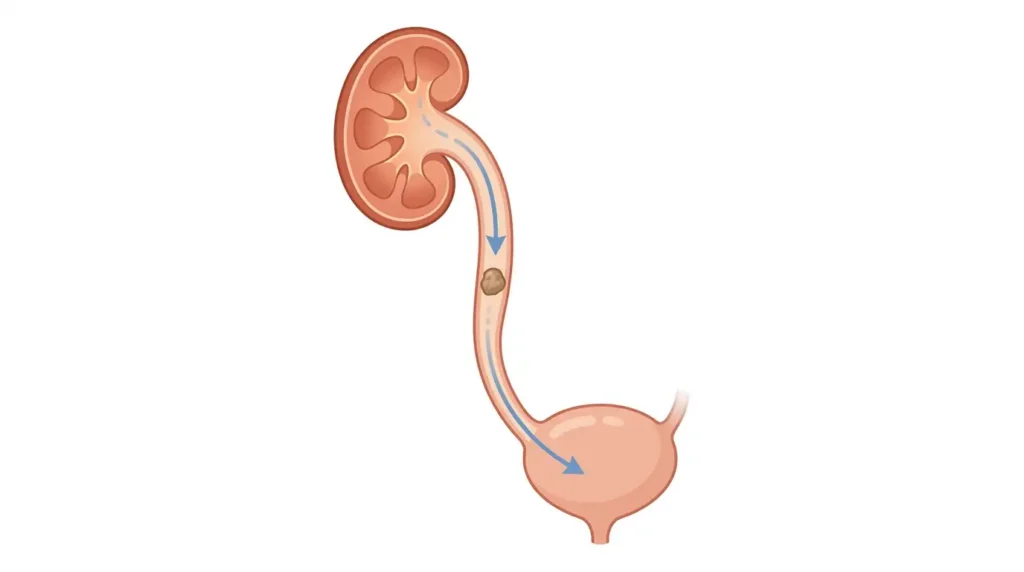
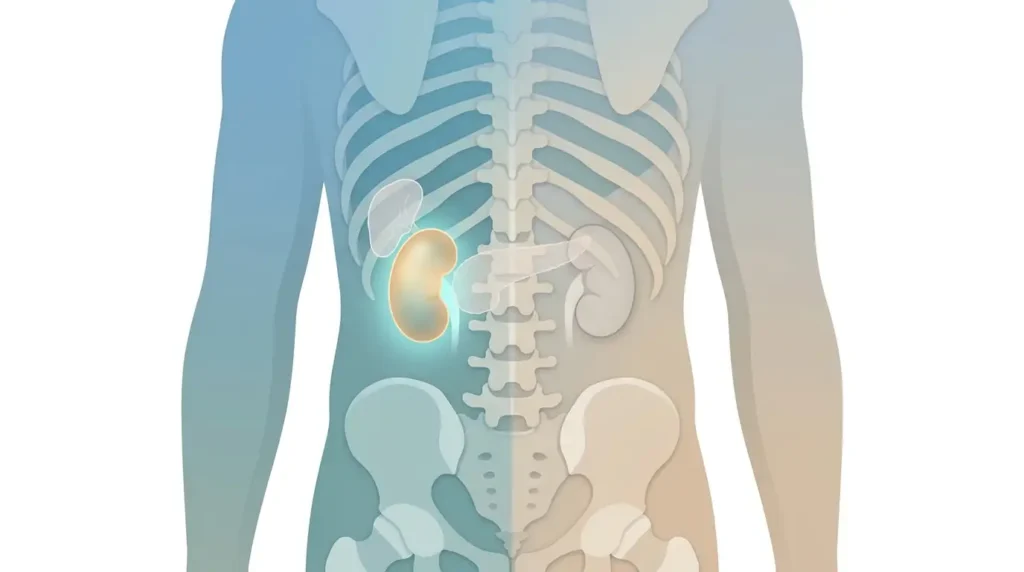
In men, kidney pain is usually felt in the flank, which is the area on one side of your back, just below the ribs and beside the spine. It can also spread toward the belly, the groin, or the testicle on the same side.
The kidneys sit in the same place in men and women, so the location is the same. What differs is the set of causes that tend to show up in men. This guide shows where the kidneys are, where male kidney pain is felt, how to tell it from back or groin pain, and when to see a doctor. For a general anatomy overview, see our guide to where your kidneys are located.
Key Takeaways
- The kidneys sit on both sides of the spine, behind the belly, between the lower ribs and the top of the hips.
- Kidney pain in men is usually felt in the flank or upper back on one side and can spread to the belly, groin, or testicle.
- Common causes in men include kidney stones, infection, and urine blockage from an enlarged prostate.
- Kidney pain is deep and does not change much when you move, while muscle pain often does.
- Fever, blood in the urine, or sudden severe pain needs prompt medical care.
Where Are the Kidneys Located in Men?
You have two kidneys. Each is about the size of a fist and sits against the back wall of your abdomen, one on each side of the spine. They lie behind your stomach, liver, and intestines, protected by the lower ribs.
The top of each kidney sits roughly at the level of the lowest ribs, and the bottom reaches near the waist. Because the liver takes up room on the right, the right kidney sits a little lower than the left. If you want to compare the two sides, our article on left kidney vs right kidney explains the difference.
From the back, the kidneys sit higher than many people expect. They are not in the lower back at hip level. They are closer to the area where your lower ribs meet your spine.

Where Does Kidney Pain Hurt in Men?
Most kidney pain is felt in the flank. The American Kidney Fund explains that kidney pain is usually felt in the sides, back, belly, or groin, and that it is often mistaken for back pain, which you can read about on the American Kidney Fund kidney pain page.
In men, kidney pain commonly shows up in these ways:
- One-sided flank pain. A deep ache or sharp pain under the ribs on the left or right side of the back.
- Pain that moves forward and down. Pain from a kidney stone often travels from the flank toward the lower belly and groin as the stone moves.
- Testicle or groin discomfort. The nerves that supply the kidney and the testicle are connected, so kidney or ureter pain can be felt in the groin or testicle without any problem in the testicle itself.
- Waves of pain. Stone pain tends to come in waves, while infection pain is often a constant dull ache.
What Causes Kidney Pain in Men?
Several conditions can cause kidney pain in men. The most common are:
- Kidney stones. Hard mineral deposits that can block the flow of urine and cause sudden, severe pain.
- Kidney infection. Often brings fever, chills, nausea, and burning with urination along with flank pain. UTIs are less common in men than in women, so an infection in a man deserves a closer look at the cause. See kidney infection symptoms in men for the warning signs.
- Urine blockage from an enlarged prostate. When the prostate narrows the urine channel, urine can back up toward the kidneys and cause swelling and pain.
- Injury. A hit to the flank during sports or a fall can bruise or damage a kidney.
- Cysts and inherited kidney disease. Large or numerous cysts can cause a dull ache on one or both sides.
To tell stone pain from infection pain, read our comparison of kidney stones vs kidney infection pain.
How Can You Tell Kidney Pain From Back Pain or Groin Pain?
The location and the extra symptoms are the best clues.
| Feature | Kidney pain | Muscle or spine pain | Groin or testicle problem |
|---|---|---|---|
| Where | Flank, high on the back under the ribs, one side | Lower back or along the spine | Groin, testicle, or scrotum |
| Feels like | Deep ache or sharp waves | Tight, sore, or stiff | Tender or heavy |
| Movement | Little change with position | Often worse with bending or lifting | May change with touch or movement |
| Other signs | Fever, blood in urine, nausea, urinary changes | Pain when pressing on a muscle | Swelling, lump, or visible change |
Our detailed guide on kidney pain vs back pain walks through more ways to tell them apart.
Is Kidney Pain on the Left or Right Side Different in Men?
The two sides do not mean different diseases, but nearby organs can add to the confusion. On the right, the liver and gallbladder sit close to the kidney. On the left, the spleen and pancreas are nearby. We cover these look-alikes in our guides to right kidney pain and left kidney pain.

When Should Men See a Doctor for Kidney Pain?
See a doctor soon if you have:
- Flank pain that lasts more than a day or keeps returning
- Burning or pain when you urinate, a weak stream, or trouble emptying your bladder
- Cloudy, dark, or foul-smelling urine
- Pain after a fall or hit to the side
Get emergency care right away for:
- Severe pain with fever, chills, or vomiting
- Blood in your urine with significant pain
- Sudden, severe testicle pain. This can be a different emergency, and every hour matters.
- Inability to pass urine
How Can Men Protect Their Kidneys?
You cannot prevent every cause of kidney pain, but these habits lower your risk of the common ones:
- Drink enough fluid through the day. Pale yellow urine is a good general sign, and steady hydration helps lower the risk of kidney stones.
- Use ibuprofen and naproxen sparingly, and ask your doctor before taking them every day.
- Keep blood pressure and blood sugar under control, since both can slowly damage the kidneys.
- Do not ignore urinary changes such as a weak stream, getting up often at night, or trouble emptying your bladder. These can point to an enlarged prostate that needs care before it affects the kidneys.
- Wear protective gear in contact sports and when doing heavy labor, since a blow to the flank can injure a kidney.
What Should You Ask Your Doctor About Kidney Pain?
Bring a short list to your visit. It helps to ask:
- Is my pain coming from my kidney, my ureter, or a nearby organ?
- Do I need a urine test, blood test, or imaging?
- Could my prostate be part of the problem?
- What signs mean I should come back sooner or go to the emergency room?
- Which pain relievers are safe for me while we find the cause?
Talk to ANC About Kidney Pain
If you have ongoing flank pain, urinary changes, or repeat kidney problems, our nephrologists can help find the cause. Call 651-772-6251 or contact our team online.
Frequently Asked Questions
What side is the kidney on in men?
Men have one kidney on each side of the spine. The right kidney sits slightly lower than the left because the liver takes up space above it.
Where is the kidney located from the back in a man?
From the back, the kidneys sit high, just below the lower ribs and beside the spine. They are above the waist, not at hip level.
Can kidney pain in men feel like groin pain?
Yes. Pain from a kidney stone or a blocked ureter can spread to the groin or testicle on the same side, even when the testicle itself is healthy.
Can an enlarged prostate cause kidney pain?
It can do so indirectly. A very enlarged prostate can block urine flow, and urine that backs up can swell the kidney and cause flank pain.
How do I know if my pain is a kidney problem or a pulled muscle?
Muscle pain usually changes with movement and feels tender when pressed. Kidney pain is deeper, high on the back, and often comes with fever, nausea, or urinary changes.
Sources
Medical Disclaimer
This article is for general educational purposes only and is not a substitute for professional medical advice, diagnosis, or treatment. Always consult a qualified healthcare provider with questions about your specific care and treatment options. If you think you may be having a medical emergency, call 911.