
Pain Is Personal, But Patterns Exist
Pain is one of the hardest things to put into words.
When something hurts in your back or side and you are trying to decide whether it is serious, the first challenge is simply describing what you are feeling. Is it sharp? Dull? Constant? Does it come and go? Does it travel?
These questions matter because they help both you and your healthcare provider understand what is happening inside your body.
Kidney pain has recognizable patterns. People who have experienced it often describe it in strikingly similar ways, even before knowing what caused it.
This guide is dedicated entirely to the sensory experience of kidney pain. Not just where it is located, but what it actually feels like, how it behaves over time, how it changes depending on the cause, and how to communicate it clearly to someone who can help.
The Core Quality of Kidney Pain
At its most fundamental, kidney pain is often described as a deep, persistent ache.
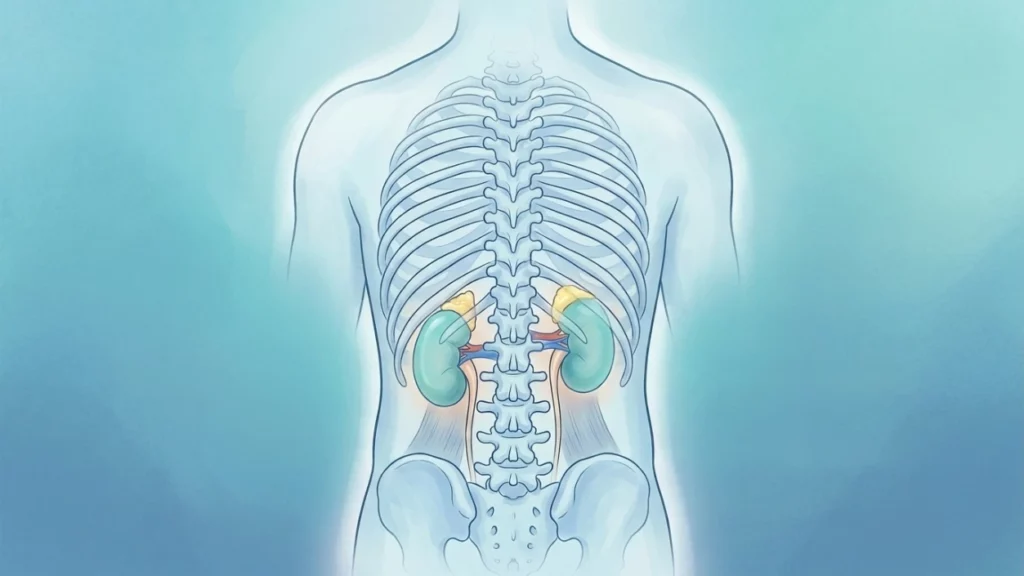
It does not usually feel like a surface-level soreness the way a bruised muscle does. Instead, it feels like it is coming from somewhere inside the body, seated beneath the back muscles, behind the rib cage, and seemingly unreachable.
Many patients describe it as feeling like pressure or a heavy fullness on one side of the back. Others say it feels like something is squeezing or throbbing internally, without any external contact triggering it.
This depth is one of kidney pain’s defining characteristics. It sits in a different layer than the kind of back pain most people are familiar with from overexertion or poor posture.
How Kidney Pain Feels With a Kidney Infection
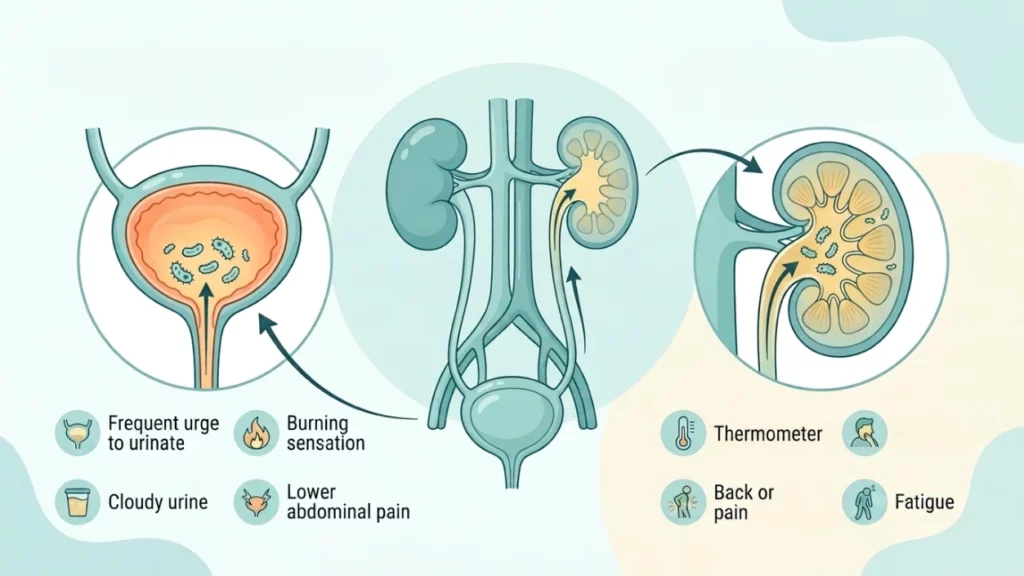
When the kidneys are infected and inflamed, the pain takes on specific qualities.
It tends to be steady and constant rather than coming in sharp waves. People often describe it as a dull, aching heaviness on one side of the back, just below the lower ribs.
The ache may feel like it pulses slightly with each heartbeat or with each breath, but it does not typically spike dramatically then disappear the way cramp-like pain does.
Some people describe the sensation as similar to a deep bruise that no one can see. There is a soreness beneath the surface that worsens when pressure is applied to the flank area.
Alongside the ache, people often also feel:
- A general heaviness or tiredness in the body
- Sensitivity or tenderness in the flank when touched or pressed
- A sense of inner warmth or heat in the affected area, particularly with fever
- Occasional sharper twinges when moving or twisting the torso
The pain from a kidney infection rarely disappears on its own or changes significantly with movement or rest. It stays present and persistent, which is part of what signals that something beyond simple muscle soreness is happening.
How Kidney Pain Feels With Kidney Stones
Kidney stone pain is a different experience entirely, and people who have been through it almost always remember it vividly.
When a stone is stationary inside the kidney, it may cause only a mild, dull ache in the flank. Some people barely notice it at this stage.
The dramatic shift happens when the stone begins to move. As it travels from the kidney down through the narrow tube called the ureter, it creates intense, cramping pain that comes in powerful waves.
People commonly describe kidney stone pain as:
- Sudden and extreme, sometimes coming on without warning
- A sharp, stabbing sensation that builds rapidly to a peak
- Cramping that grips one side of the back or abdomen in waves
- Pain that is nearly impossible to find relief from, regardless of position
- A sensation that makes it difficult to sit still, stand still, or lie still
The wave-like nature of kidney stone pain is one of its most distinctive features. A severe wave may last anywhere from a few minutes to half an hour, ease off slightly, and then return with similar or greater intensity.
As the stone moves lower toward the bladder, the pain often shifts downward from the flank into the lower abdomen, groin, and sometimes into the inner thigh or genital area.
How Kidney Pain Feels With Chronic Kidney Conditions
Not all kidney pain is acute and dramatic. Some kidney conditions produce a slower, quieter kind of discomfort.
People living with conditions such as polycystic kidney disease, chronic kidney disease, or recurring kidney inflammation sometimes describe a persistent low-level ache or heaviness in the flank that has been present for weeks, months, or even years.
This chronic pain may fluctuate in intensity. Some days it is barely noticeable. Other days it flares into something more significant without an obvious trigger.
Some people describe it as a background awareness of their kidneys rather than true pain. A sense that something is there, pressing or pulling gently, even when it is not acutely painful.
Over time, this kind of persistent discomfort can affect energy levels, sleep quality, and daily comfort. It is worth discussing with a kidney specialist if it has been present for more than a few weeks.
How Kidney Pain Feels vs. Other Types of Back Pain
This is the comparison most people want to understand most clearly.
Muscle pain tends to feel like soreness or tightness that is close to the surface. You can often point to the exact spot and feel tenderness when you press on it. It usually worsens with certain movements and improves with rest, heat, or gentle stretching.
Nerve pain often has a burning, shooting, or electric quality. It may radiate down the leg. It is frequently triggered by specific positions or movements.
Kidney pain sits deeper than both of these. It does not typically change based on how you move. Stretching does not relieve it. Heat may provide very mild comfort but does not resolve it. And crucially, it is almost always accompanied by other signals that have nothing to do with muscles or nerves, such as fever, urinary changes, or nausea.
The depth, persistence, and accompanying symptoms are the three things that most reliably set kidney pain apart from other sources of back pain.
Pain Intensity: What to Expect
Kidney pain can range widely in intensity, from barely noticeable to completely overwhelming.
A mild kidney infection in its early stages may feel like no more than a nagging discomfort on one side. Easy to dismiss, easy to push through.
A significant kidney infection or large kidney stone can produce pain intense enough to make ordinary tasks impossible. Standing, sitting, walking, and sleeping can all become genuinely difficult.
Most people rate kidney infection pain somewhere in the moderate to severe range. Kidney stone pain, during an active wave, is frequently rated by patients as among the most intense pain they have ever experienced.
It is worth noting that intensity alone does not always indicate severity of the underlying condition. Some serious kidney issues can produce relatively mild pain, particularly in older adults or people with certain chronic conditions. This is why paying attention to the full picture of symptoms, not just the pain level, is so important.
How to Describe Your Kidney Pain to a Doctor
Getting the most out of a medical visit often comes down to how clearly you can describe what you are experiencing.
Helpful things to communicate about your pain:
- The quality: Is it dull, sharp, cramping, throbbing, or pressure-like?
- The location: Which side is it on? Does it stay in one spot or travel?
- The pattern: Is it constant or does it come and go in waves?
- The intensity: On a scale of one to ten, how would you rate it at its worst?
- The triggers: Does anything make it better or worse, such as movement, eating, or urination?
- The duration: When did it start, and has it been getting worse over time?
- The companions: What other symptoms have appeared alongside the pain?
This kind of description gives your healthcare provider a rich picture to work with and helps guide them toward the most relevant tests and evaluations.
When the Pain Means Act Now
Some patterns of kidney pain call for immediate medical attention rather than a scheduled appointment.
Please seek care without delay if your kidney pain:
- Is severe and sudden, especially if paired with fever or chills
- Is accompanied by vomiting that prevents you from drinking fluids
- Comes with visible blood in the urine
- Does not ease at all over 24 to 48 hours
- Escalates in intensity rather than staying steady or improving
- Appears in a pregnant woman at any intensity
At Associated Nephrology Consultants in Maplewood, MN, our kidney specialists work with patients throughout the Saint Paul area to evaluate pain and identify its source accurately. We believe that no one should have to live with unresolved discomfort or unanswered questions about their kidney health.
We do not offer diagnoses through this blog, but we always encourage patients to trust what their body is telling them. Reach out when something feels wrong.
Understanding Your Pain Is the First Step
Pain can feel isolating, especially when you are not sure what is causing it or how seriously to take it.
The descriptions in this guide are meant to help you feel less alone in your experience and more equipped to take action. Kidney pain is real, it is recognizable, and it is something that specialists understand deeply.
At Associated Nephrology Consultants, our team is committed to listening carefully, explaining clearly, and providing the compassionate, expert kidney care that every patient in Maplewood, Minnesota and the greater Saint Paul area deserves.
When you are ready to talk, we are ready to listen.
Frequently Asked Questions
What does kidney pain feel like at first?
Kidney pain often begins as a dull, steady ache in one side of the back, just below the rib cage. In the early stages, many people describe it as a deep heaviness or pressure that sits differently from typical muscle soreness. It may be easy to dismiss at first, but it tends to persist and is usually accompanied by other symptoms such as fatigue, urinary changes, or a low-grade fever.
Is kidney pain sharp or dull?
It depends on the cause. Kidney infection pain tends to be dull, deep, and constant. Kidney stone pain is typically sharp, intense, and comes in waves. Chronic kidney conditions often cause a persistent low-level ache. Understanding the quality of your pain and describing it accurately to your healthcare provider helps them determine the most likely cause.
Can kidney pain feel like gas or bloating?
In some cases, kidney-related discomfort can feel like an internal fullness or pressure that resembles bloating. However, gas and bloating are usually felt more centrally in the abdomen and shift with digestion. Kidney pain sits on one side of the back and flanks and does not respond to passing gas or dietary changes. Accompanying fever or urinary symptoms help distinguish it from a digestive issue.
Does kidney pain throb or pulse?
Some people describe kidney pain as having a throbbing quality, particularly when the kidneys are inflamed due to infection. The pulsing sensation may feel more noticeable when lying still or at rest. Throbbing kidney pain paired with fever, chills, or urinary symptoms is a strong signal to seek medical evaluation rather than wait.
Can kidney pain come and go throughout the day?
Yes. Depending on the cause, kidney pain may fluctuate in intensity throughout the day rather than staying at a constant level. Kidney stone pain is particularly variable, arriving in waves of severity followed by brief periods of reduced discomfort. Kidney infection pain may also vary but tends to remain more persistent overall. Pain that comes and goes over several days without resolving warrants a medical conversation.
How is kidney pain different from period cramps in women?
Period cramps are typically felt in the central lower abdomen and tend to follow a cyclical pattern aligned with the menstrual cycle. Kidney pain is felt on one side of the back or flank and is not cycle-related. Kidney pain is also typically accompanied by fever, urinary changes, or nausea, none of which are characteristic of typical menstrual cramps. If back or side pain appears outside of your normal cycle pattern or comes with those other symptoms, kidney involvement is worth considering.