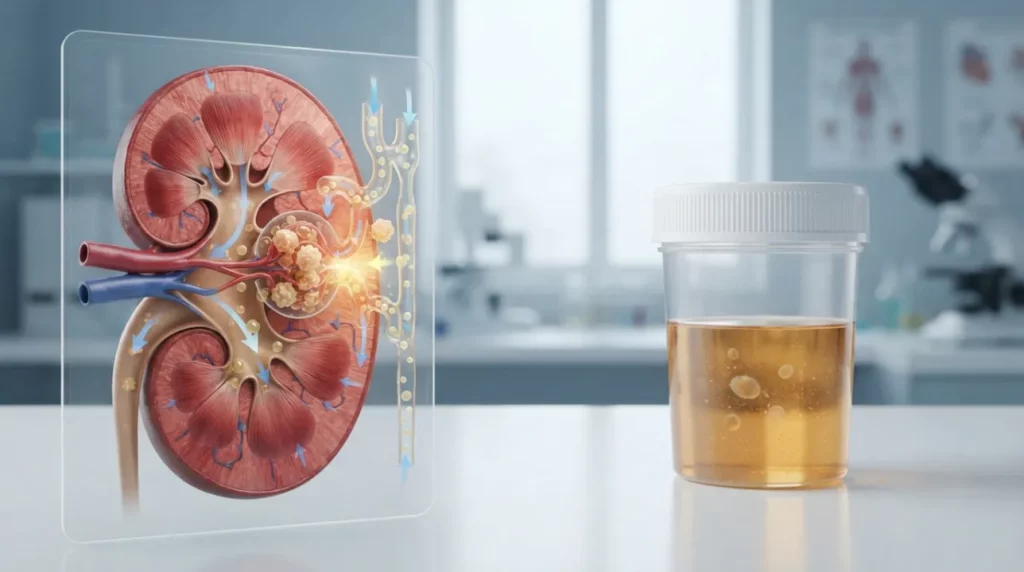
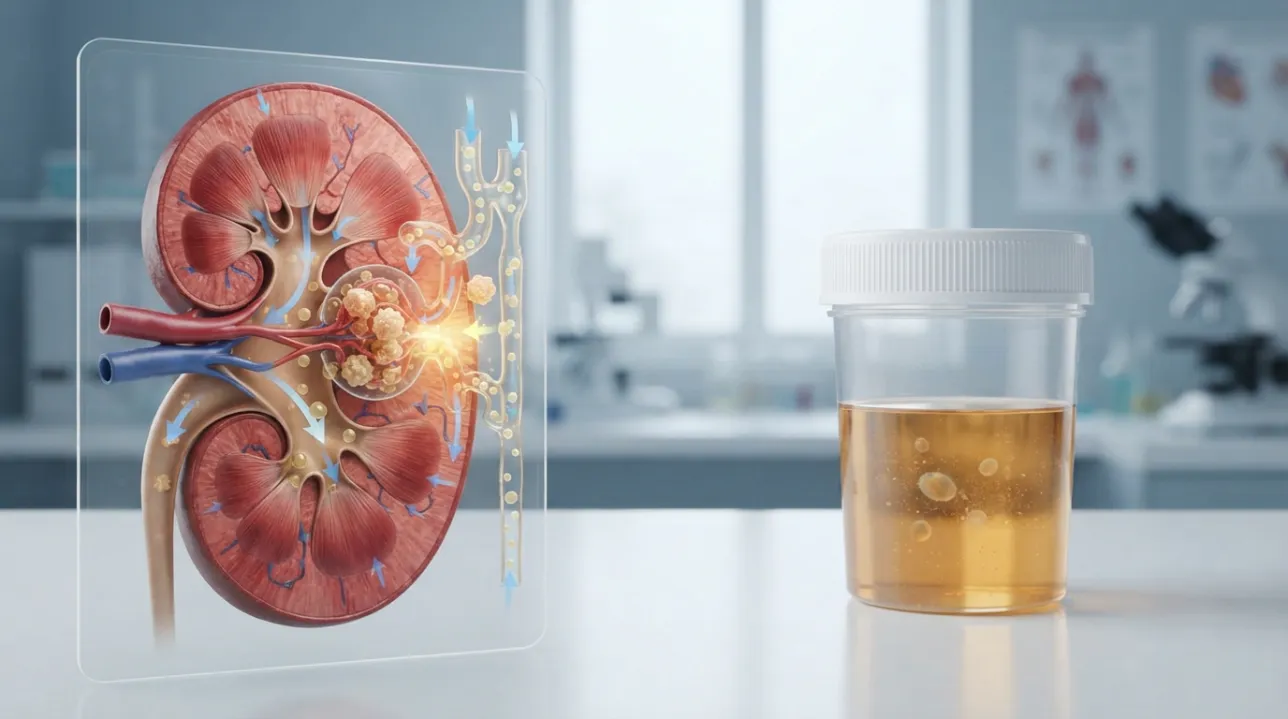
Protein in the urine, known medically as proteinuria, is one of the earliest and most important signals a kidney test can reveal. It often shows up on a routine urinalysis long before any other symptom appears, which is exactly why it matters so much.
Key Takeaways
- Proteinuria means protein, usually albumin, is leaking into the urine instead of staying in the blood.
- Healthy kidneys filter out very little protein; a healthy adult should have less than about 150 mg in a 24-hour urine sample.
- Proteinuria can be temporary, caused by exercise, fever, or dehydration, or persistent, which is more concerning.
- Persistent proteinuria is a marker for chronic kidney disease, even when other kidney function tests look normal.
- Diabetes and high blood pressure are the two most common underlying causes of persistent proteinuria.
What Is Proteinuria?
Proteinuria is the medical term for having an abnormal amount of protein, most often albumin, in your urine. Albumin is a protein that normally stays in the bloodstream, where it helps build muscle, repair tissue, and fight infection, and healthy kidneys are supposed to keep almost all of it out of the urine.
According to the National Kidney Foundation, albuminuria, another name for this condition, occurs when the kidneys’ filtering structures are damaged enough to let albumin leak through into the urine.
What Counts as a Normal Amount of Protein in Urine?
A healthy adult typically excretes less than about 150 milligrams of protein in a 24-hour period. When testing uses a urine albumin-to-creatinine ratio instead of a full 24-hour collection, a result under 30 mg/g is generally considered normal.
Results above these thresholds are typically categorized in stages, mild elevation is often called microalbuminuria, while more significant, persistent elevation is referred to as clinical proteinuria. Where a result falls in that range affects how closely it needs to be monitored.
What Causes Protein to Appear in Urine?
Not all proteinuria points to kidney disease. Temporary, harmless causes include intense exercise, fever, dehydration, and emotional stress, all of which can cause a short-lived spike that resolves within a day or two on its own.
Persistent proteinuria is a different story. It is most commonly linked to diabetes and high blood pressure, the two leading causes of chronic kidney disease, though it can also result from autoimmune conditions or structural kidney problems. In each of these cases, the protein leakage is a downstream effect of damage to the kidney’s filtering units, not a separate condition in its own right.
Why Does Proteinuria Matter So Much for Kidney Health?
Proteinuria is considered one of the earliest and most reliable warning signs of kidney damage, sometimes appearing before a decline in eGFR shows up on bloodwork. A person can have an eGFR in the “normal” range above 60 and still have proteinuria that signals underlying kidney disease.
Persistent proteinuria is also linked to a higher risk of the condition progressing over time, which is why nephrologists treat a confirmed positive result as something worth acting on rather than simply monitoring indefinitely. Catching it early, before it becomes more significant, generally gives treatment the best chance of slowing further kidney damage.
What Are the Warning Signs Beyond a Lab Test?
Most people with proteinuria have no noticeable symptoms in the early stages, which is exactly why regular urine testing matters more than waiting for symptoms to appear. When symptoms do show up, especially at higher protein levels, they can include foamy or bubbly urine, swelling in the hands, feet, or face, and unusual fatigue.
Foamy urine in particular is a sign worth mentioning to a doctor. It happens because protein changes the surface tension of urine, and while occasional foam can be harmless, persistent foaminess is worth a conversation with your care team. Swelling, medically called edema, tends to show up first in areas affected by gravity, like the ankles by evening, before becoming more widespread if protein loss continues.
How Is Proteinuria Diagnosed and Confirmed?
Diagnosis typically starts with a simple dipstick urine test during a routine visit, followed by a more precise urine albumin-to-creatinine ratio test if the initial result is abnormal. Because temporary causes are common, doctors usually repeat testing before confirming persistent proteinuria rather than acting on a single result taken on its own.
Once confirmed, additional tests, including blood work and sometimes imaging, help determine the underlying cause and guide the right treatment approach. In some cases, particularly when the cause isn’t clear from bloodwork and imaging alone, a kidney biopsy may be recommended to pinpoint exactly what type of kidney damage is causing the protein leakage.
How Is Proteinuria Monitored and Managed Over Time?
Once persistent proteinuria is confirmed, monitoring becomes an ongoing part of kidney care rather than a one-time test. Your nephrologist will typically recheck your urine albumin-to-creatinine ratio at regular intervals to see whether it’s stable, improving, or worsening, since that trend shapes treatment decisions as much as the initial result.
Beyond blood pressure medications like ACE inhibitors and ARBs, managing the underlying cause matters just as much, tighter blood sugar control for a patient with diabetes, for example, can meaningfully reduce protein leakage over time. Reducing dietary sodium is also commonly recommended, since it supports the blood-pressure-lowering effect of these medications.
Frequently Asked Questions
Is proteinuria the same thing as kidney failure?
No. Proteinuria is a symptom and warning sign, not a diagnosis of kidney failure on its own. Many people with proteinuria have early-stage kidney disease that can be managed effectively, especially when caught early.
Can proteinuria be reversed?
It depends on the cause. Temporary proteinuria from exercise or dehydration resolves on its own, and proteinuria caused by well-controlled diabetes or blood pressure can sometimes improve significantly with treatment.
What does foamy urine mean?
Foamy urine can be a sign of protein in the urine, though occasional mild foam is often harmless. Persistent or increasingly foamy urine is worth mentioning to your doctor for a urine test.
Do I need to see a nephrologist if I have proteinuria?
It depends on how much protein is present and the suspected cause. Your primary care doctor may manage mild, well-explained proteinuria, while persistent or significant proteinuria is often referred to a nephrologist for further evaluation.
Can high blood pressure medication help with proteinuria?
Yes, certain blood pressure medications, particularly ACE inhibitors and ARBs, are commonly used specifically because they reduce protein leakage from the kidneys in addition to lowering blood pressure.
Does proteinuria always require treatment right away?
Not always. Mild, temporary proteinuria often just needs repeat testing to confirm it resolves. Persistent proteinuria, however, typically does warrant treatment aimed at the underlying cause once confirmed.
Talk to ANC If You Have Questions About Proteinuria
If a recent test showed protein in your urine, or if you have ongoing questions about what it means for your kidney health, ANC’s nephrology team can help you understand your results and next steps. Contact ANC today to schedule a consultation with our nephrology team.
Medical Disclaimer
This article is for general educational purposes only and is not a substitute for professional medical advice, diagnosis, or treatment. Always consult a qualified healthcare provider with questions about a medical condition or your specific test results.