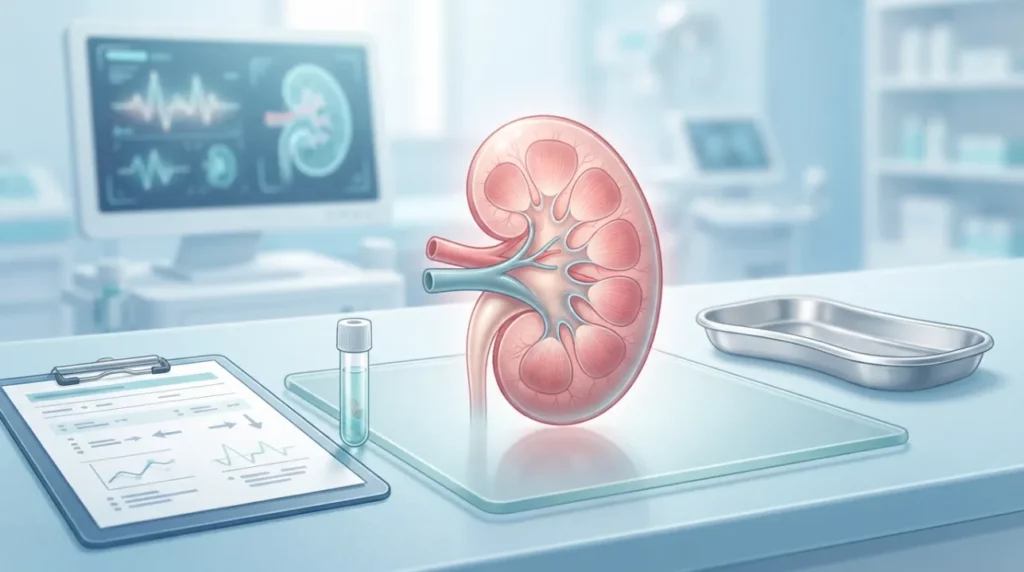
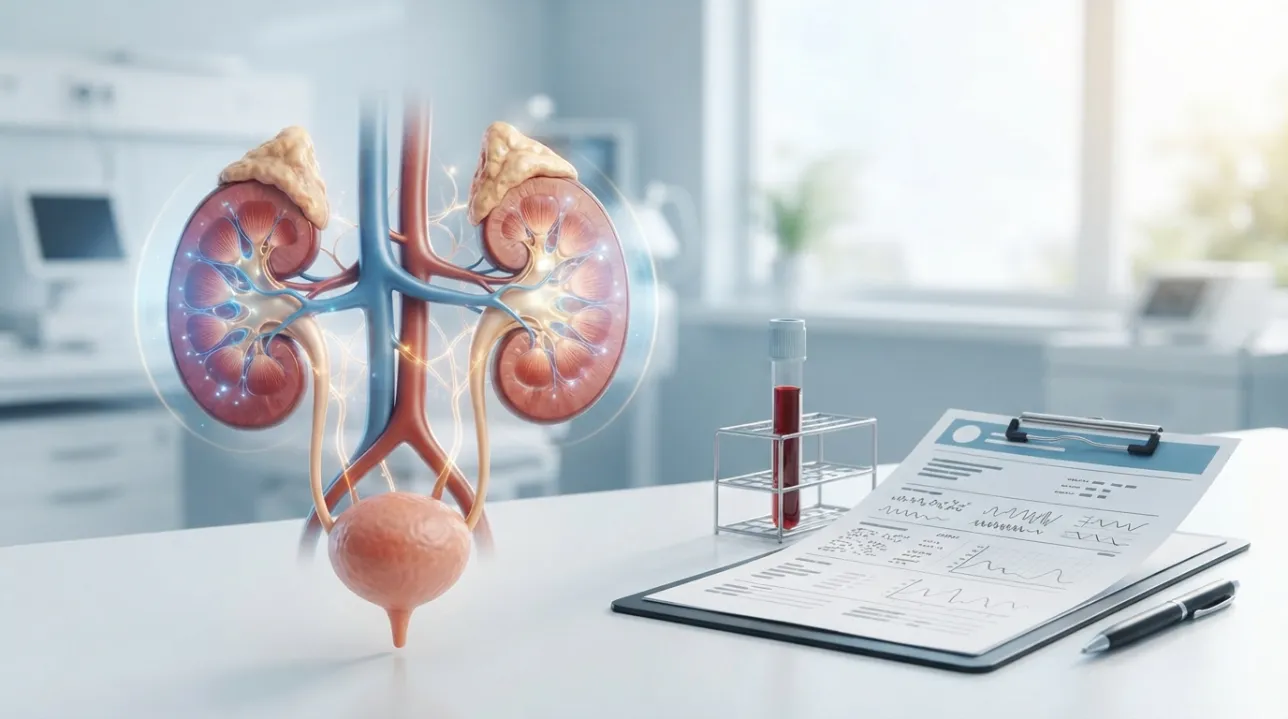
A kidney function test result full of unfamiliar abbreviations, eGFR, creatinine, BUN, can be confusing to look at without context. Understanding what each number represents, and where it falls on a normal range, makes it much easier to have an informed conversation with your care team.
Key Takeaways
- eGFR is the main number used to measure kidney function, and 90 or above is considered normal.
- Creatinine is a waste product used to calculate eGFR; higher creatinine generally means lower kidney function.
- BUN measures a different waste product and is affected by more than just kidney function, including diet and hydration.
- A single abnormal result is not automatically a diagnosis, doctors look for a pattern over time.
- Kidney function naturally declines somewhat with age, which is factored into how results are interpreted.
What Is eGFR, and What Does the Number Mean?
eGFR stands for estimated glomerular filtration rate, a calculation of how well your kidneys are filtering waste from your blood. According to the National Kidney Foundation, an eGFR of 90 or above generally reflects normal kidney function, while lower numbers indicate a decreasing level of function.
The eGFR scale breaks down into stages: 60 to 89 is a mild decrease, 30 to 59 is moderate, 15 to 29 is severe, and below 15 indicates kidney failure. These stages are the same ones used to classify chronic kidney disease, which is why a single eGFR result carries real diagnostic weight.
What Is Creatinine, and Why Does It Matter?
Creatinine is a waste product produced by normal muscle activity that healthy kidneys filter out of the blood efficiently. When kidney function declines, creatinine builds up in the blood, so a rising creatinine level is one of the clearest early signals of reduced kidney function.
Creatinine is also the primary input used to calculate eGFR, alongside age, sex, and other factors. Because muscle mass affects how much creatinine a person naturally produces, doctors interpret creatinine levels in context rather than against one universal number.
What Is BUN, and How Is It Different From Creatinine?
BUN, or blood urea nitrogen, measures a different waste product than creatinine, one that comes from the breakdown of protein rather than muscle activity. Like creatinine, elevated BUN can indicate reduced kidney function, but it is also affected by diet, dehydration, and certain medications, so it is considered a less specific marker on its own.
Doctors typically look at BUN alongside creatinine rather than in isolation, since a high BUN with a normal creatinine often points to something other than kidney disease, such as dehydration or a high-protein diet. A high BUN paired with a rising creatinine, on the other hand, is a stronger combined signal that the kidneys themselves are the source of the problem.
What Does an Abnormal Result Actually Mean?
A single abnormal lab value is a signal to look closer, not an automatic diagnosis. Kidney function can dip temporarily due to dehydration, a recent illness, or certain medications, then return to baseline once the underlying cause resolves.
What matters most to a nephrologist is the trend over multiple tests. An eGFR that stays consistently below 60 for three months or longer is one of the clinical markers used to diagnose chronic kidney disease, which is why repeat testing is so central to an accurate picture.
Why Does Kidney Function Naturally Change With Age?
Kidney function tends to decline gradually starting in a person’s thirties or forties, even without any underlying disease. This is a normal part of aging and is factored into how lab results are interpreted for older adults.
This is also why the same eGFR number can mean something different for a 30-year-old than for an 80-year-old. A nephrologist weighs a result against a person’s age, medical history, and other lab values rather than judging it against a single fixed cutoff.
What Is a Urine Albumin Test, and How Does It Fit In?
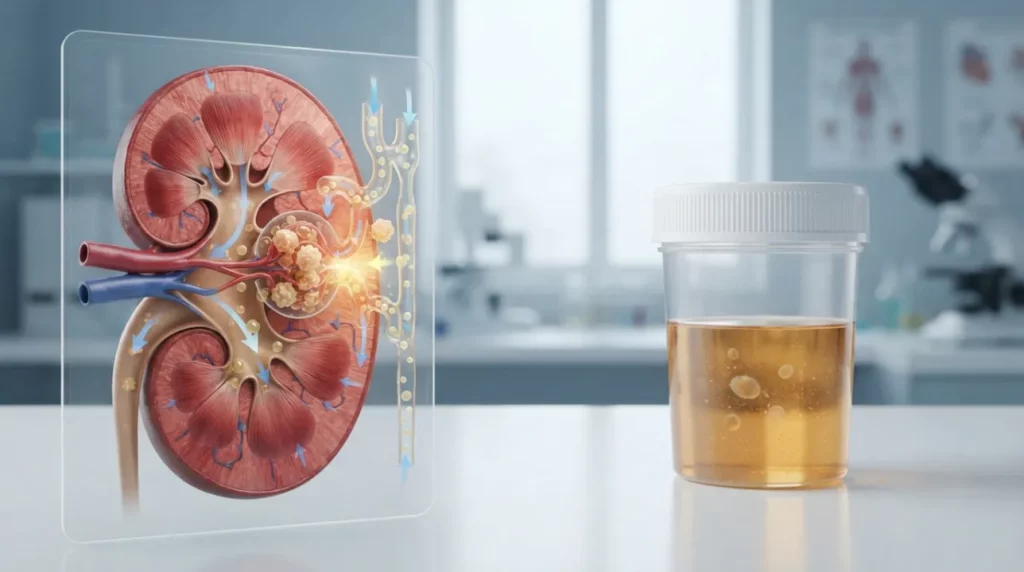
Alongside blood tests, doctors often check for albumin in the urine, a protein that healthy kidneys are supposed to keep out of urine almost entirely. This test, sometimes reported as a urine albumin-to-creatinine ratio, catches a different kind of kidney damage than eGFR or creatinine alone.
It’s possible to have a normal eGFR and still have protein in the urine, which is exactly why a complete kidney function workup usually includes both a blood test and a urine test rather than relying on just one.
When Should You Ask Your Doctor About Your Results?
It is always reasonable to ask your doctor to walk through what your specific eGFR, creatinine, and BUN numbers mean for you. This is especially worth doing if you have diabetes or high blood pressure, since both conditions raise the risk of declining kidney function over time.
If a result comes back outside the normal range, ask whether it is a one-time finding or part of a pattern, and whether repeat testing or a referral to a nephrologist makes sense. Bringing these questions to your next appointment turns a confusing lab report into an actionable conversation rather than a source of ongoing worry.
Frequently Asked Questions
What is a normal eGFR number?
A normal eGFR is generally 90 or above, though this can vary slightly with age. An eGFR consistently below 60 for three months or longer is one of the main markers used to diagnose chronic kidney disease, and this threshold is the same one used in the staging system described above.
Can dehydration affect kidney function test results?
Yes. Dehydration can temporarily raise both creatinine and BUN levels without reflecting any lasting kidney damage. Retesting after rehydrating is a common next step when a result looks unexpectedly abnormal.
Does a high creatinine level always mean kidney disease?
Not necessarily. Creatinine can be elevated due to high muscle mass, certain supplements, or temporary dehydration. A nephrologist considers creatinine alongside eGFR and other factors rather than relying on it alone.
How often should kidney function be tested?
For most healthy adults, kidney function is checked as part of routine bloodwork during regular physical exams. Patients with diabetes, high blood pressure, or a family history of kidney disease are generally advised to have it checked at least once a year.
Can kidney function test results improve over time?
In some cases, yes, particularly when a temporary cause like dehydration or a medication side effect is identified and corrected. Once kidney function has declined due to chronic kidney disease, results are less likely to fully return to a prior baseline.
Why does my eGFR result mention my age and sex?
eGFR is calculated using creatinine along with age and sex because muscle mass, which affects creatinine production, naturally differs across these groups. Including them makes the estimate more accurate than creatinine alone would be.
Talk to ANC About Your Kidney Function Results
If you have questions about a recent lab result, or if you would like a clearer picture of what your numbers mean for your long-term kidney health, ANC’s nephrology team can help. Contact ANC to schedule a consultation.
Medical Disclaimer
This article is for general educational purposes only and is not a substitute for professional medical advice, diagnosis, or treatment. Always consult a qualified healthcare provider with questions about a medical condition.