
Two Conditions, One Confusing Area
When pain strikes in the back, side, or abdomen alongside urinary symptoms, two conditions immediately come to mind for most healthcare providers: kidney stones and kidney infections.
For patients, telling them apart can feel nearly impossible.
Both affect the kidneys. Both can cause significant pain. Both produce changes in urination. And both require medical attention. The confusion is completely understandable.
But kidney stones and kidney infections are fundamentally different conditions. They develop for different reasons, feel different in the body, follow different patterns, and require different treatment approaches entirely.
Being able to recognize which one you may be dealing with is genuinely valuable. It helps you describe your symptoms more accurately to your doctor, respond appropriately to what your body is telling you, and understand the care you receive.
This guide will walk you through both conditions side by side, with clear, patient-friendly language, so the differences become easier to see.
A Brief Overview of Each Condition
Before comparing them, it helps to understand what each condition actually is.
Kidney stones are hard mineral deposits that form inside the kidney when certain substances in the urine, such as calcium, oxalate, or uric acid, become too concentrated and crystallize. Stones can range from tiny grains to larger formations. They become painful when they move through the narrow passages of the urinary tract.
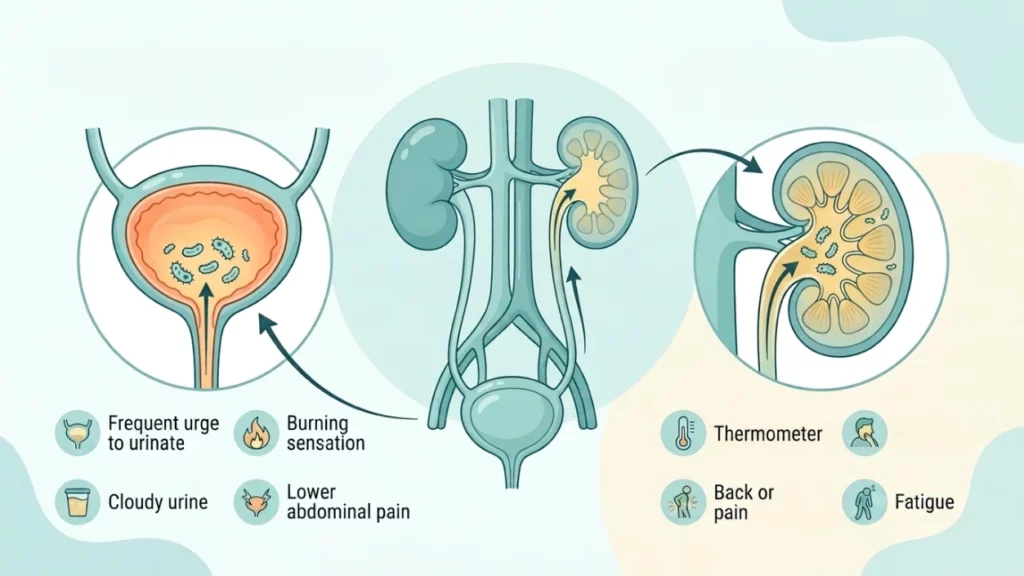
Kidney infections are bacterial infections that typically begin in the bladder and travel upward through the ureters into one or both kidneys. The medical name for a kidney infection is pyelonephritis. Once bacteria reach the kidneys, they cause inflammation and a range of symptoms that reflect the body’s immune response fighting the infection.
One is a physical obstruction. The other is an active infection. This fundamental difference shapes nearly every aspect of how each condition presents.
The Pain: The Clearest Difference Between the Two
Pain is where the distinction between kidney stones and kidney infections becomes most apparent.
How Kidney Stone Pain Feels
Kidney stone pain is widely considered one of the most intense types of pain a person can experience.
When a stone is sitting still inside the kidney, the discomfort may be mild or even unnoticeable. The dramatic pain begins when the stone starts moving through the ureter, the narrow tube connecting the kidney to the bladder.
Kidney stone pain characteristics:
- Comes on suddenly and intensely, often without warning
- Sharp, severe, and cramping in quality
- Arrives in powerful waves that build to a peak then ease slightly before returning
- Radiates from the flank downward toward the lower abdomen, groin, and inner thigh as the stone moves
- Makes it difficult to find any comfortable position, sitting, standing, or lying down
- Can cause sweating, nausea, and vomiting due to its intensity
The traveling, wave-like nature of kidney stone pain is its most distinctive feature. The pain moves because the stone moves. As it descends through the urinary tract, the location of the pain shifts lower in the body.
Between waves, there may be a brief reduction in intensity, but full relief rarely comes until the stone has passed or been treated.
How Kidney Infection Pain Feels
Kidney infection pain has a completely different character.
Rather than sharp, sudden waves, it presents as a deep, persistent, constant ache that settles into the flank on one side and stays there.
Kidney infection pain characteristics:
- Develops more gradually than stone pain, building over hours or a day or two
- Dull, deep, and steady rather than sharp or cramping
- Remains relatively fixed in the flank area without the dramatic downward travel of stone pain
- Feels like pressure or heaviness beneath the ribs on the affected side
- May have a throbbing quality that worsens with movement or deep breathing
- Does not typically shift location as dramatically as kidney stone pain
Kidney infection pain does not come in waves. It stays. And it stays accompanied by systemic illness signs that kidney stone pain alone does not produce.
The Symptom Profiles: Comparing the Full Picture
Pain is just one part of the picture. The full symptom profile of each condition is where the clearest differences emerge.
Kidney Stone Symptom Profile
Symptoms associated with kidney stones include:
- Severe, wave-like flank and abdominal pain
- Blood in the urine, often pink, red, or brown in color
- Nausea and vomiting triggered by pain intensity
- Frequent urge to urinate
- Painful urination, particularly as the stone nears the bladder
- Urinating in small amounts
- Restlessness and inability to find a comfortable position
- Cloudy or strong-smelling urine if infection has also developed
Fever is not a standard feature of an uncomplicated kidney stone. The presence of fever alongside kidney stone symptoms is a signal that an infection may have developed alongside the stone, which is a more serious situation requiring prompt medical attention.
Kidney Infection Symptom Profile
Symptoms associated with kidney infections include:
- Steady, dull flank pain on one side
- Fever, often significant, frequently above 101 degrees Fahrenheit
- Chills and shaking that can be intense
- Nausea and vomiting tied to illness rather than pain peaks
- Burning or painful urination
- Frequent and urgent need to urinate
- Cloudy, foul-smelling, or blood-tinged urine
- Fatigue and general unwellness
- Tenderness in the flank area when pressed
- Confusion in older adults
The presence of fever and chills is the most reliable signal that separates a kidney infection from an uncomplicated kidney stone. When fever appears alongside back or flank pain and urinary symptoms, infection must be considered and evaluated promptly.
The Key Distinguishing Features at a Glance
While every person experiences these conditions somewhat differently, these are the most reliable distinguishing features to keep in mind.
The pain pattern: Kidney stone pain is sharp, severe, and wave-like with a traveling quality. Kidney infection pain is dull, steady, and fixed.
Fever and chills: Almost always present with a kidney infection. Not typically present with an uncomplicated kidney stone.
Pain movement: Kidney stone pain moves downward from flank to groin as the stone travels. Kidney infection pain stays in the flank region.
Onset: Kidney stone pain often strikes suddenly and severely. Kidney infection pain tends to build more gradually over hours or days.
Systemic illness: Feeling genuinely unwell with significant fatigue, chills, and fever points strongly toward infection rather than a stone alone.
Blood in urine: Can occur with both conditions, but is particularly common with kidney stones.
When Both Occur at the Same Time
It is possible to have both a kidney stone and a kidney infection simultaneously.
This happens when a kidney stone causes a blockage in the urinary tract that allows bacteria to multiply behind it. The result is an infected, obstructed kidney, a combination that is more serious than either condition alone.
When both are present together, a person will typically experience the intense pain of a kidney stone alongside the fever, chills, and systemic illness of an infection at the same time.
This combination requires urgent medical attention. An infected, blocked kidney can deteriorate quickly and may need both antibiotic treatment and procedures to relieve the obstruction.
If you are experiencing severe kidney stone pain and also develop fever and chills, seek medical care immediately rather than waiting.
How Each Condition Is Diagnosed
Both conditions can be evaluated effectively with a combination of tests.
A healthcare provider will typically begin with a detailed history of your symptoms, a physical examination, and a urine analysis. Urine tests can reveal the presence of bacteria, blood, white blood cells, and other markers that help differentiate infection from a stone.
Imaging, such as a CT scan or ultrasound, can identify the presence and location of a kidney stone and assess whether there is any swelling or blockage in the urinary tract.
Blood tests may be ordered to check for signs of infection and assess kidney function.
Getting an accurate diagnosis matters because the treatment for a kidney stone and the treatment for a kidney infection are entirely different.
Treatment Differences
Kidney stones are treated based on their size and location. Small stones may pass on their own with adequate hydration and pain management. Larger stones may require medical procedures such as shockwave therapy, ureteroscopy, or in rare cases, surgery.
Kidney infections are treated with antibiotics prescribed by a healthcare provider. Mild to moderate infections are typically managed at home with oral antibiotics. Severe infections may require hospitalization and intravenous antibiotic treatment.
Attempting to treat one condition as if it were the other leads to delays in appropriate care. This is why getting a proper diagnosis from a qualified healthcare provider is so important, rather than trying to self-diagnose based on symptoms alone.
When to Seek Medical Care
Both conditions require professional evaluation. Please reach out to a healthcare provider promptly if you experience:
- Severe pain in the back, flank, or abdomen that does not ease
- Fever of 101 degrees Fahrenheit or higher alongside back or urinary symptoms
- Blood in the urine
- Inability to keep fluids down due to vomiting
- Symptoms that are worsening rather than improving
- Any of these symptoms while pregnant
At Associated Nephrology Consultants in Maplewood, MN, our team of kidney specialists has extensive experience evaluating and managing both kidney stones and kidney infections for patients throughout the Saint Paul area. We provide thorough, personalized care with the attention and compassion every patient deserves.
We do not provide diagnoses through this blog. But we always encourage patients to seek care promptly when their symptoms raise concern. Waiting rarely helps, and acting early almost always does.
Protecting Your Kidneys Going Forward
Whether you have experienced a kidney stone, a kidney infection, or both, taking steps to protect your kidney health going forward is always worthwhile.
Protective habits for both conditions:
- Stay consistently well hydrated throughout the day
- Eat a balanced diet and limit processed foods high in sodium
- Do not ignore urinary symptoms, even mild ones
- Attend regular medical check-ups, especially if you have had either condition before
- Speak with your doctor about any recurring symptoms or ongoing risk factors
- If you have had kidney stones, ask about dietary or medication strategies to reduce recurrence
- If you have had kidney infections, discuss prevention strategies with your healthcare provider
Your kidneys work for you every single day. A little consistent attention to your health goes a long way toward keeping them functioning well for years to come.
Closing Thoughts: You Have Come a Long Way
If you have read through this entire guide, you now have a solid understanding of both conditions, how they feel, how they differ, what to watch for, and when to act.
That knowledge matters. It can help you respond more quickly, describe your symptoms more clearly, and approach your healthcare conversations with greater confidence.
At Associated Nephrology Consultants, we are honored to serve patients across Maplewood, Minnesota and the greater Saint Paul area. Our team brings together deep clinical expertise and a genuine commitment to treating every patient as a whole person, not just a set of symptoms.
If you have concerns about kidney stones, kidney infections, or any aspect of your kidney health, we welcome you to reach out. We are here, and we are ready to help.
Frequently Asked Questions
How can I tell if I have a kidney stone or a kidney infection?
The clearest way to distinguish the two is to look at the full picture of symptoms. Kidney stone pain is typically sharp, severe, and wave-like, moving from the flank toward the groin. Kidney infections cause a steady, dull ache in the flank paired with fever, chills, and nausea. Fever is the most reliable differentiator. Its presence strongly suggests infection rather than an uncomplicated stone.
Can a kidney stone cause a fever?
An uncomplicated kidney stone alone does not typically cause fever. However, if a kidney stone creates a blockage that allows bacteria to accumulate behind it, a serious infection can develop alongside the stone. This combination produces both the intense pain of the stone and the fever and chills of an active infection. Fever with kidney stone symptoms requires immediate medical attention.
Is the pain from a kidney infection worse than a kidney stone?
Both can be extremely painful, but they feel different. Kidney stone pain is often described as among the most intense pain a person can experience, especially during active waves. Kidney infection pain is typically more of a persistent, deep aching discomfort rather than peaks of extreme intensity. Pain tolerance and individual experience vary, so both deserve prompt medical attention regardless of how severe they feel.
Do kidney stones and kidney infections have the same treatment?
No. Kidney stones are treated based on their size and location, ranging from hydration and pain management to medical procedures for larger stones. Kidney infections are treated with prescribed antibiotics. Using the wrong treatment approach delays recovery and can allow either condition to worsen. An accurate diagnosis from a healthcare provider is essential before any treatment begins.
Can you have a kidney stone and a kidney infection at the same time?
Yes. This can occur when a kidney stone creates a blockage that prevents urine from flowing freely, allowing bacteria to grow behind the obstruction. The result is called an obstructed infected kidney and is a more serious condition than either alone. Symptoms include severe pain alongside fever, chills, and significant illness. This combination requires urgent medical evaluation and treatment without delay.
How long does each condition take to resolve with treatment?
Kidney infections typically begin to improve within two to three days of starting appropriate antibiotics, with a full treatment course lasting seven to fourteen days. Kidney stone resolution varies widely. Small stones may pass within one to two weeks with adequate hydration. Larger stones requiring procedures may take longer depending on the approach used. Both conditions benefit significantly from early treatment.