
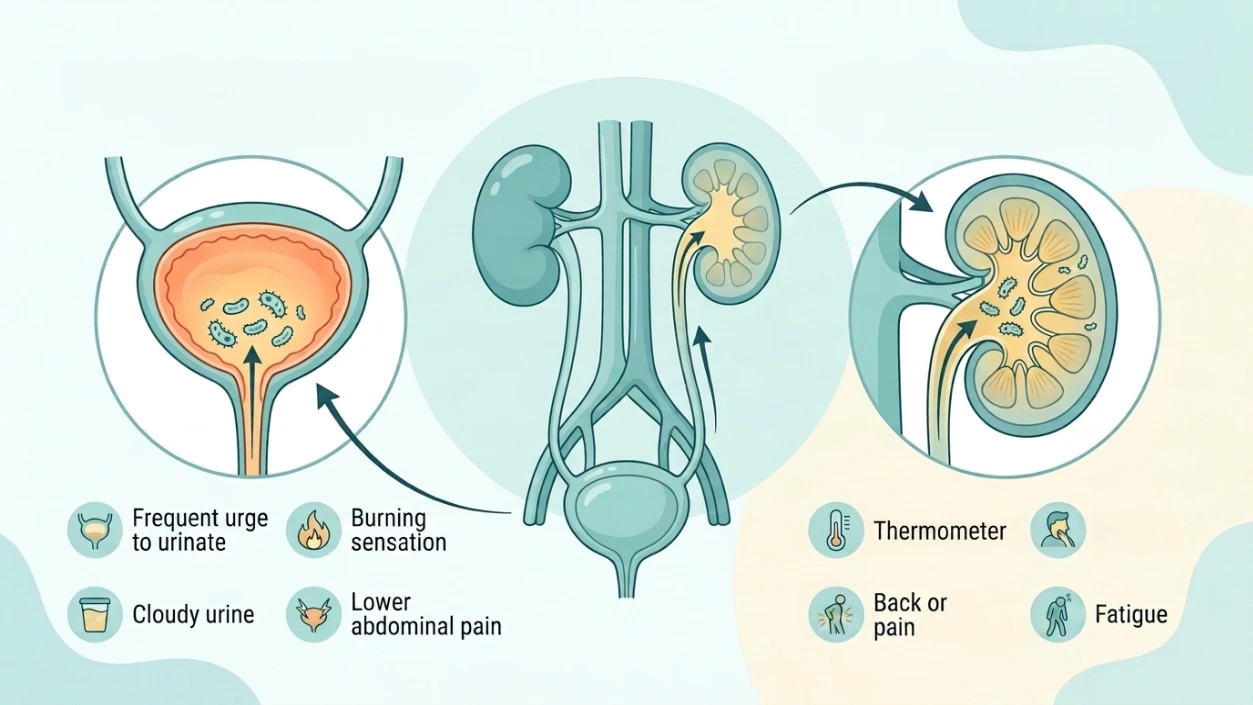
Urinary tract infections are common, and most stay confined to the bladder. But sometimes an infection travels further and reaches the kidneys, becoming a more serious condition. Understanding the difference can help you know when to act quickly.
What Is a UTI?
A urinary tract infection, or UTI, happens when bacteria enter the urinary system, most often affecting the bladder. This is sometimes called a bladder infection or cystitis. It is one of the most common infections, especially among women.
What Is a Kidney Infection?
A kidney infection, also known as pyelonephritis, occurs when bacteria travel up from the bladder into one or both kidneys. Because the kidneys are a more sensitive and vital organ, this type of infection is generally considered more serious than a simple bladder infection.
Comparing the Symptoms
A typical bladder infection causes:
- Burning or pain during urination
- A frequent, urgent need to urinate
- Cloudy or strong smelling urine
- Mild pelvic discomfort
A kidney infection often includes those same symptoms, plus additional signs such as:
- Fever and chills
- Pain in the back or side, usually higher up than typical bladder discomfort
- Nausea or vomiting
- Feeling noticeably more unwell overall
Why the Difference Matters
A bladder infection is usually manageable and improves quickly with the right treatment. A kidney infection needs prompt medical attention because, left untreated, it can lead to more serious complications, including damage to kidney tissue or the infection spreading into the bloodstream.
How Are They Diagnosed?
Both conditions are typically diagnosed with a urine test that checks for bacteria and white blood cells. If a kidney infection is suspected, your provider may also check for fever, tenderness in your back or side, and in some cases order imaging to look for complications.
When to See a Doctor
See a healthcare provider promptly if you have typical UTI symptoms that do not improve, or if you develop fever, back pain, or nausea, which may signal the infection has reached your kidneys.
Seek emergency care immediately if you have high fever, confusion, severe pain, or vomiting that prevents you from keeping fluids down.
How Associated Nephrology Consultants Can Help
Our team helps patients understand the difference between a simple bladder infection and a more serious kidney infection, and guides treatment every step of the way. We proudly serve Maplewood and the greater Saint Paul, Minnesota area.
This article is for general education and is not a substitute for medical advice. Please talk with a qualified healthcare provider about your specific symptoms.
Associated Nephrology Consultants (ANC)
1997 Sloan Place, Suite 17, Maplewood, MN 55117
Phone: 651-772-6251
Hours: Monday to Friday, 8:30 AM to 4:00 PM
Website: ancmn.com