
How Do You Get Kidney Stones
Kidney stones are one of the most common health concerns affecting people of all ages. Many patients wonder how these painful stones form and what causes them. Understanding how kidney stones develop can help you reduce your risk, make lifestyle changes, and talk with your healthcare providers, including experts at Associated Nephrology Consultants.
Kidney stones form when certain substances in the urine become too concentrated and start to crystallize. These substances include calcium, oxalate, uric acid, and other minerals. When they build up faster than urine can dilute them, hard stone‑like formations start to appear. Over time, these crystals stick together and grow into stones.
Types of Kidney Stones
There are several types of kidney stones, each with its own causes:
Calcium Stones
These are the most common type. Calcium combines with oxalate or phosphate in the urine and forms crystals. High oxalate foods, low fluid intake, or imbalances in minerals can contribute to calcium stones.
Uric Acid Stones
These form when your urine is too acidic. High protein diets, dehydration, and conditions like gout can increase uric acid levels, making stones more likely.
Struvite Stones
These stones form after a urinary tract infection. Bacteria change the chemical makeup of urine and create crystals that can grow quickly.
Cystine Stones
These are rare and happen in people with a hereditary condition that causes excess cystine to leak into the urine.
Risk Factors That Make Stones More Likely
Not Drinking Enough Water
Dehydration is one of the biggest risk factors for kidney stones. When you do not drink enough fluids, your urine becomes concentrated, making it easier for minerals to crystallize.
Diet and Eating Habits
Certain diets can increase your risk:
• High sodium intake causes more calcium to be excreted into the urine.
• High protein diets can raise uric acid levels.
• High oxalate foods such as spinach, nuts, chocolate, and tea can combine with calcium to form stones.
Family History and Genetics
If someone in your family has had kidney stones, your chances are higher. Some people inherit conditions that increase stone formation.
Medical Conditions
Certain health issues make stones more likely:
• Gout
• Obesity
• Inflammatory bowel disease
• Certain urinary tract abnormalities
These conditions change the balance of minerals in the body or urine, encouraging stones to form.
Medications and Supplements
Some medications can increase the risk of stones by altering the way your body handles minerals. Vitamins or supplements taken without medical guidance, especially calcium or vitamin D in high doses, may also contribute.
Climate and Environment
Living in hot, dry climates can make you more prone to dehydration, increasing the risk of stones. People who sweat a lot without replacing fluids are more likely to develop concentrated urine.
How Stones Actually Form
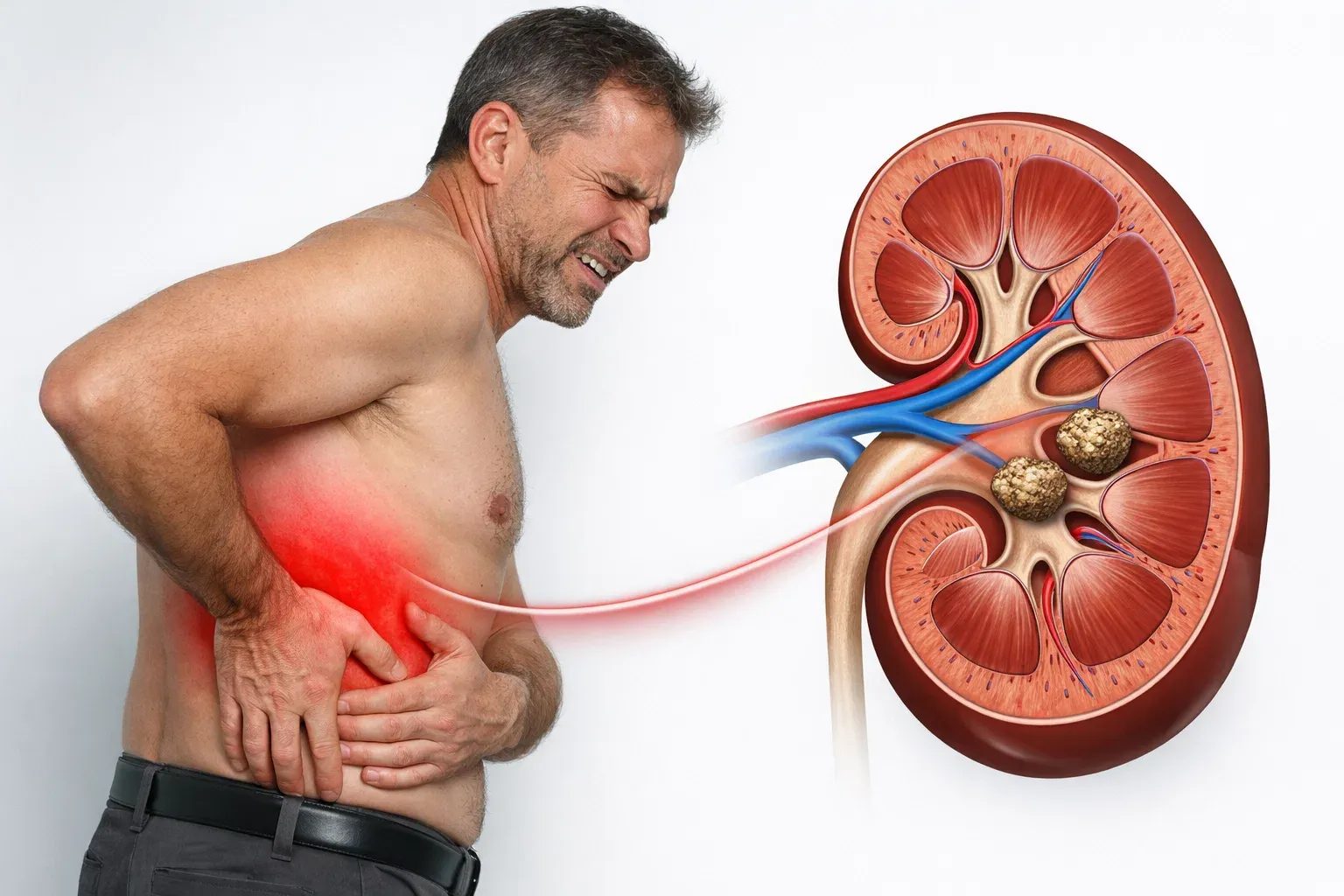
When urine contains more crystal‑forming substances than fluid, the excess minerals can stick together. Tiny crystals begin to form on the inner surface of the kidney. If they are not flushed out by urine, they continue to grow larger. Over time, these stones can move into the ureter, causing pain and other symptoms.
Symptoms of Kidney Stones
Some kidney stones cause no symptoms and pass without notice. Others cause noticeable signs such as:
• Severe pain in the side, back, or lower abdomen
• Pain that moves toward the groin
• Pain with urination
• Pink, red, or brown urine
• Frequent urge to urinate
• Nausea or vomiting
• Fever or chills if there is an infection
If you experience these symptoms, prompt medical evaluation is important.
Prevention Is Often Possible
Many people can reduce their risk of stones with lifestyle changes:
• Drink plenty of water each day to keep urine dilute
• Moderate sodium and protein intake
• Balance calcium and oxalate foods in your diet
• Talk to your doctor about medications or conditions that may affect stone risk
Specialists at Associated Nephrology Consultants can help evaluate your individual risk factors. They can order urine and blood tests, analyze previous stones, and provide personalized guidance to help prevent future stones.
When to Seek Medical Care
You should contact a healthcare provider if:
• Pain is severe and does not improve
• You see blood in your urine
• You have fever or chills
• You have nausea or vomiting that prevents hydration
• You cannot urinate
Early care helps manage symptoms and prevent complications.
Frequently Asked Questions
What causes kidney stones to form?
Kidney stones form when minerals in your urine become too concentrated and start to crystallize. Dehydration, diet, genetics, and medical conditions can all contribute.
Can drinking water prevent kidney stones?
Yes. Staying hydrated helps dilute your urine and flush out minerals before they can form crystals.
Are kidney stones caused by too much calcium?
Not always. While calcium plays a role, most calcium stones form due to how your body handles it, not from excess calcium in your diet. A balanced intake is usually recommended.
What foods increase the risk of kidney stones?
High sodium foods, high protein diets, and oxalate-rich foods like spinach, nuts, and chocolate can raise your risk, especially when fluid intake is low.
Is kidney stone risk hereditary?
Yes. A family history of stones increases your chances of developing them. Genetic conditions like cystinuria also contribute to stone formation.
Can kidney stones form without symptoms?
Yes. Some small stones pass without causing noticeable symptoms, but others can cause severe pain or complications.
Do certain medications increase kidney stone risk?
Yes. Some drugs and supplements may raise the risk, especially when taken without medical guidance. Always discuss new medications with your provider.
How do doctors diagnose kidney stones?
Doctors may use urine and blood tests, X-rays, CT scans, or ultrasounds to detect and evaluate kidney stones.
Are kidney stones dangerous if untreated?
Yes. They can block urine flow, cause infections, and lead to kidney damage if not managed properly.
Can kidney stones come back?
Yes. Once you’ve had a kidney stone, you’re more likely to have another. Prevention strategies from specialists like Associated Nephrology Consultants can help lower your risk.