Your kidneys quietly do a lot of work every day. They filter waste from your blood, balance fluids, regulate blood pressure, support healthy bones, and help produce red blood cells. When your kidneys start losing function, the warning signs can be subtle at first. Recognizing early symptoms can help you get care sooner and protect your long‑term health.
In this blog, we’ll talk about five common signs your kidneys may not be working properly, why they happen, and when to speak with a healthcare provider.
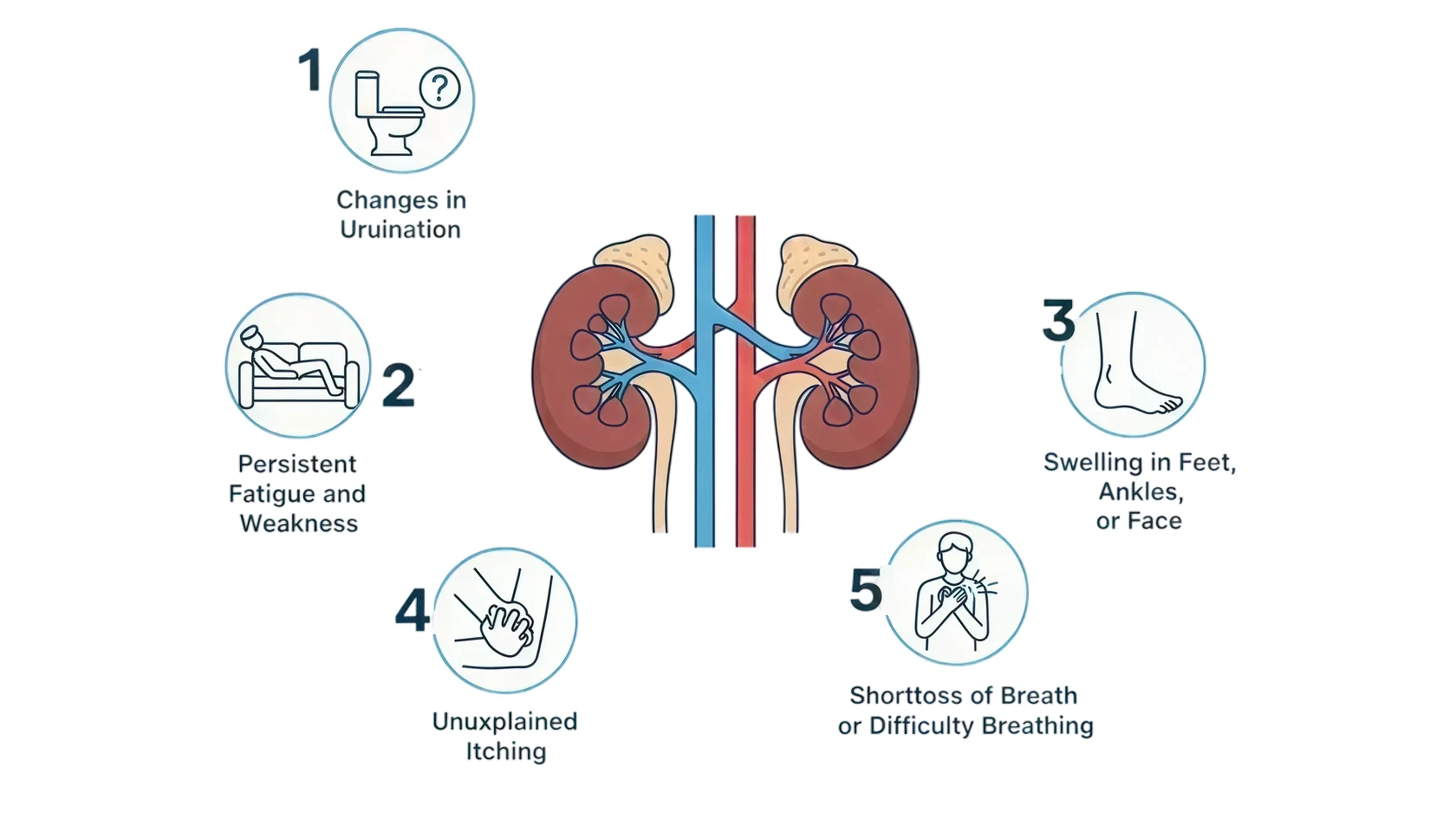
1. Changes in Urination
One of the earliest signals of kidney dysfunction is a change in urination. Because the kidneys play a major role in fluid balance and waste removal, changes in how you urinate can indicate trouble.
Common changes to watch for include:
Increased frequency, especially at night
Foamy or bubbly urine
Dark, cloudy, or tea‑colored urine
Difficulty urinating or a decreased amount of urine
If you notice sudden or persistent changes in your urine patterns, it’s important to talk with your doctor or nephrology specialist. These symptoms can also be caused by infection or other conditions, but they shouldn’t be ignored.
2. Persistent Fatigue and Weakness
Feeling unusually tired or weak even after rest can be a sign your kidneys aren’t removing waste properly. When kidney function declines, toxins and waste products build up in the bloodstream. This can make you feel constantly fatigued, foggy, or just “not yourself.”
Fatigue may also develop because impaired kidneys can’t produce enough of the hormone erythropoietin, which helps make red blood cells. Fewer red blood cells can lead to anemia and persistent exhaustion.
If fatigue is affecting your daily life and you can’t trace it to stress, lack of sleep, or another cause, it’s worth discussing with your healthcare provider.
3. Swelling in Feet, Ankles, or Face
Healthy kidneys help maintain the right balance of salt and water in your body. When they are not working well, fluid can build up in tissues, leading to swelling called edema.
You may notice puffiness:
Around the eyes
In the feet or ankles
In the hands
Swelling that persists or gets worse over time could be linked to kidney issues or other health conditions, but it should always be evaluated by a clinician.
4. Unexplained Itching
When kidney function declines, toxins that should be filtered out remain in the bloodstream. This buildup can affect the skin, causing an uncomfortable sensation that isn’t relieved by lotion.
This itch isn’t like typical dry‑skin itching. It can feel deep and persistent, especially on the back, legs, or arms. Many people describe it as unrelenting and distracting.
If itching is continuous and doesn’t improve with normal skin care, it’s worth discussing kidney function with your provider.
5. Shortness of Breath or Difficulty Breathing
Shortness of breath can occur for several reasons when kidneys aren’t functioning properly.
Fluid overload from impaired kidneys can accumulate in the lungs, making breathing more difficult. Anemia related to kidney disease can also lower oxygen levels and contribute to breathlessness.
If you experience shortness of breath that comes on suddenly or interferes with daily activities, seek medical evaluation right away.
When to Contact a Healthcare Provider
None of these symptoms should be ignored, especially if they are new, persistent, or getting worse. Early detection and intervention can slow disease progression and protect your kidney function.
Talk to your primary care doctor or ask for a referral to a nephrologist—a kidney specialist—if you notice any of these signs and are unsure what they mean.
How Associated Nephrology Consultants Can Help
At Associated Nephrology Consultants, we help patients understand their kidney health and connect them with personalized care plans. Whether you’re noticing early warning signs or managing an existing kidney condition, our team listens, educates, and supports you every step of the way.
Visit https://ancmn.com to learn more or to schedule a consultation with one of our experienced kidney care specialists.
Your kidneys work hard every day for your health. If you notice signs they might need help, don’t wait. Early action makes a difference.