When a person’s kidneys can no longer filter blood properly, dialysis becomes essential. But to perform dialysis, doctors need a safe and reliable way to access the bloodstream. That’s where vascular access comes in. It is a specially created access point that allows blood to flow to and from the dialysis machine.
There are different types of dialysis access. Each comes with its own advantages, limitations, and purposes. In this article, we explain the main types of access including Arteriovenous AV Fistula, Arteriovenous AV Graft, and Central Venous Catheter CVC. We also discuss when and why each is used and what patients and caregivers should know.
What Is Vascular Access and Why It Matters
Dialysis requires a way to send blood from your body into a dialysis machine to be cleaned and then returned. A good vascular access
Provides strong and reliable blood flow for effective dialysis
Minimizes risks of infection, clotting, or damage to blood vessels
Serves as a long term lifeline when kidneys are not working
Choosing the right type of access depends on the patient’s blood vessels, urgency of dialysis need, overall health, and long term treatment plan.
Main Types of Dialysis Access
AV Fistula The Preferred Long Term Access
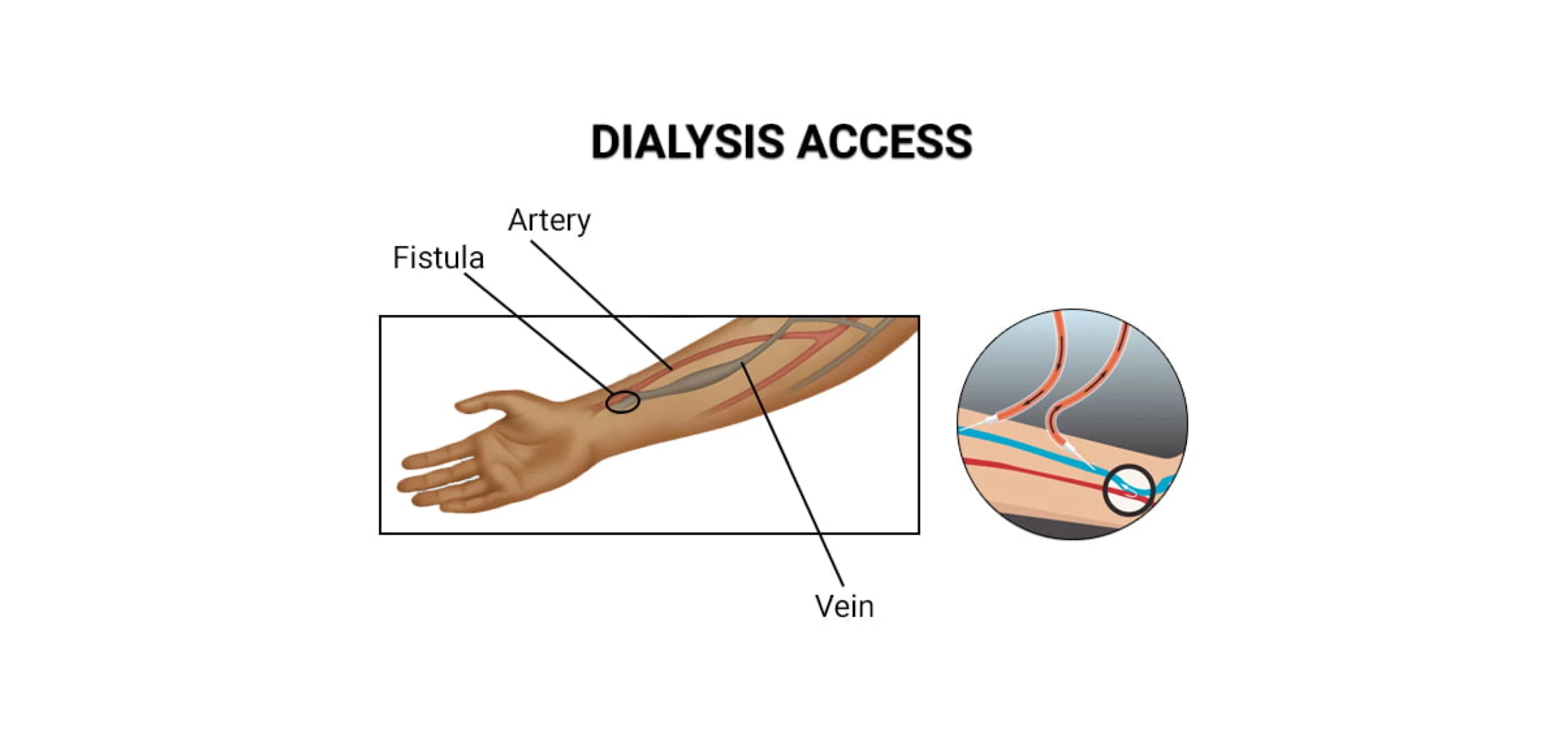
An AV fistula is created by surgically connecting one of your arteries directly to a vein usually in the arm. Over time the vein becomes larger and stronger allowing repeated needle insertions for dialysis.
Benefits of AV fistula
Uses your own blood vessels with no synthetic material
Lower risk of infection or clotting compared to grafts or catheters
Can last many years if cared for properly
Things to consider
Takes time to mature usually several weeks to months before it is ready for use
Not suitable for everyone especially those with small veins or vascular issues
AV Graft When Veins Are Not Ideal
If a patient’s veins are too small or weak to form a proper fistula an AV graft may be used. In this method a synthetic tube is placed under the skin to connect an artery to a vein.
When AV graft is useful
When vein quality does not allow for a fistula
When dialysis access is needed more quickly since grafts mature faster
Advantages
Usually ready for use within a few weeks
Works well for patients who are not candidates for fistula
Limitations
Higher risk of infection and clotting
Generally has a shorter lifespan compared to fistulas
Central Venous Catheter CVC Short Term or Emergency Access
When dialysis must begin immediately and there is no time to wait for a fistula or graft to mature a central venous catheter may be placed. This involves inserting a tube into a large vein in the neck chest or groin.
When CVC is used
For urgent or emergency dialysis start
While waiting for a fistula or graft to mature
Advantages
Can be used immediately
No need for surgical healing time
Drawbacks
Higher risk of infection and clotting
Not suitable for long term dialysis due to increased risk of complications
How Doctors Choose the Right Access
The decision depends on several factors including
Condition and size of your veins and arteries
How soon dialysis needs to begin
Your overall health and medical history
Long term treatment goals
If your veins are healthy a fistula is usually preferred due to its durability and lower risk. If immediate access is needed or vein quality is poor a graft or catheter may be used.
What Patients Should Know
Care and maintenance are critical for any type of access. Regular monitoring can prevent infection clotting or access failure.
AV fistulas are considered the gold standard due to better long term outcomes
Grafts and catheters are important alternatives when a fistula is not an option
Patients must keep follow up appointments and report any signs of access issues to their care team immediately
Conclusion
Understanding the different types of vascular access including AV fistula AV graft and CVC is essential for anyone starting or managing dialysis. Each access type plays a specific role based on your medical needs and treatment timeline.
Work with your nephrologist and vascular surgeon to determine the best option for your care. With the right access and good care you can begin dialysis with confidence and focus on maintaining your health and quality of life.