
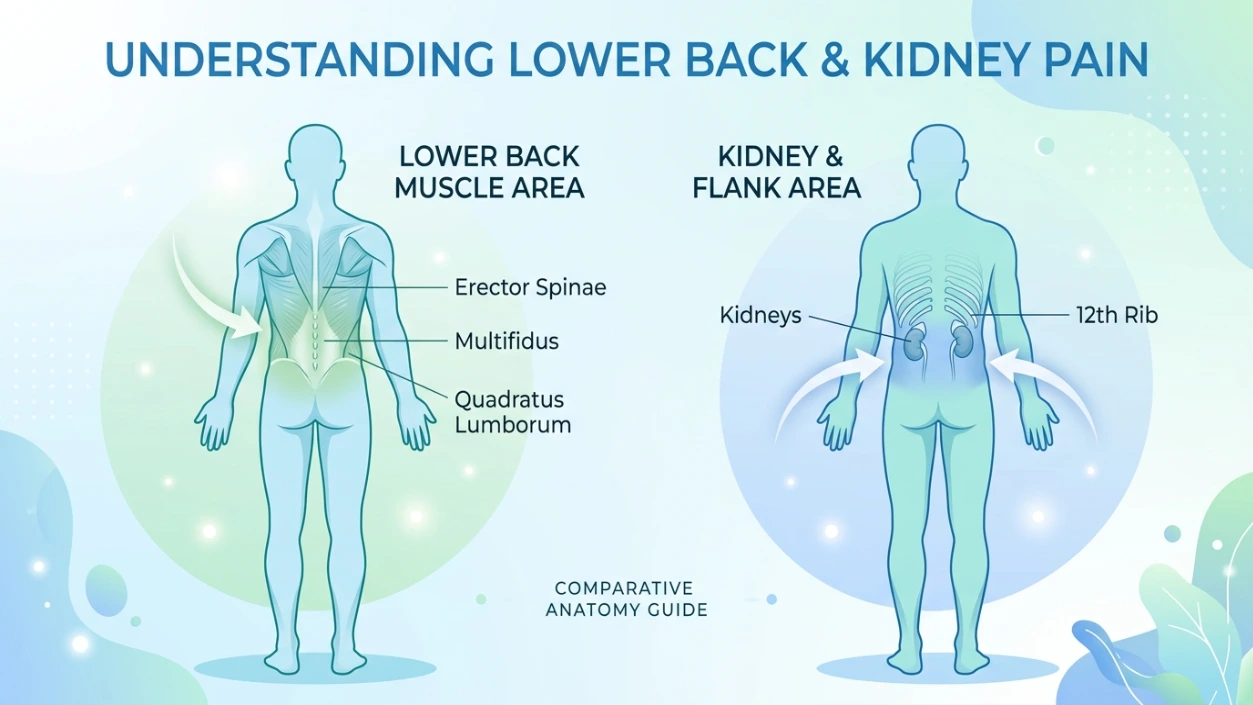
Back pain is common, and most of the time it comes from muscles, joints, or posture. But sometimes pain that feels like it is in your back is actually coming from your kidneys. Learning the difference can help you decide when to rest and when to call a doctor.
Where Each Type of Pain Shows Up
Muscle and joint back pain is usually felt across the lower or middle back and can spread to the shoulders or hips. Kidney pain tends to sit higher up, in the flank area on one or both sides, just below the rib cage. It can also wrap toward the front of your body.
How the Pain Behaves
Muscle related back pain often changes with movement. It may feel worse when you bend, twist, lift something, or sit for a long time, and it may ease up when you rest or stretch. Kidney pain usually stays constant no matter your position or activity level. This steady, unchanging quality is one of the biggest clues.
Other Symptoms to Watch For
Kidney pain is often accompanied by other signs that muscle pain does not usually cause, such as:
- Fever or chills
- Nausea or vomiting
- Cloudy, dark, or bloody urine
- Frequent or painful urination
- A general feeling of being unwell
If your back pain shows up alongside any of these symptoms, it is worth having it checked rather than assuming it is a strained muscle.
Common Causes Behind Each Type
Back pain is often caused by muscle strain, poor posture, herniated discs, or arthritis. Kidney pain is more often linked to kidney stones, kidney infections, or urinary tract blockages. Because the causes and treatments are different, an accurate diagnosis matters.
When Should You See a Doctor?
See a healthcare provider if your pain lasts more than a few days, does not respond to rest, or comes with fever, nausea, or changes in urination. A proper exam and simple tests can quickly point to the real cause.
Seek emergency care immediately if you have severe pain with high fever, confusion, inability to urinate, or blood in your urine along with intense pain. These symptoms need urgent evaluation.
How Associated Nephrology Consultants Can Help
Our nephrology team is skilled at telling the difference between muscular back pain and true kidney related pain. Using thorough evaluations and modern diagnostic tools, we help patients across Maplewood and the greater Saint Paul, Minnesota area get clear answers and a plan for feeling better.
This article is for general education and is not a substitute for medical advice. Please talk with a qualified healthcare provider about your specific symptoms.
Associated Nephrology Consultants (ANC)
1997 Sloan Place, Suite 17, Maplewood, MN 55117
Phone: 651-772-6251
Hours: Monday to Friday, 8:30 AM to 4:00 PM
Website: ancmn.com